
Discover the blue butterfly pea flower’s spiritual meaning, including serenity, inner peace, transformation, cultural roots, and modern symbolism.
The blue butterfly pea flower’s spiritual meaning is often connected with serenity, inner peace, intuition, and personal transformation. With its vivid blue petals and delicate shape, this tropical flower can inspire feelings of calmness and quiet reflection. In the United States, people interested in spirituality, mindfulness, and natural symbolism may see it as a reminder to slow down and reconnect with themselves.
Unlike symbols with long, established religious histories, the butterfly pea flower’s spiritual meanings are largely modern interpretations shaped by its appearance, traditional uses, and cultural associations. Its rich blue color evokes the sky, deep water, and the quiet space between thoughts. As a result, the flower can serve as a personal symbol of emotional balance, thoughtful change, and a peaceful approach to life. Understanding this flower means looking beyond its beauty. Its botanical history, traditional uses in South and Southeast Asia, and growing visibility in American wellness culture help explain why people may associate it with serenity. These interpretations are meaningful to many people, but they aren’t universal spiritual rules or scientifically proven messages.
Quick Answer
In the United States, the blue butterfly pea flower spiritual meaning commonly represents serenity, emotional balance, intuition, and peaceful transformation. Its blue petals can symbolize a calm mind, while its natural color-changing properties offer a useful metaphor for change, adaptability, and personal growth.
TL;DR
- Serenity: Blue petals evoke calmness, stillness, and emotional balance.
- Intuition: The flower can represent reflection and trust in inner wisdom.
- Transformation: Its color-changing tea offers a metaphor for personal change.
- Cultural roots: Butterfly pea has a long history in South and Southeast Asia.
- Modern symbolism: People may use it in meditation, journaling, and mindful rituals.
- Personal meaning: Its spiritual message depends on individual beliefs and experiences.
What Is the Blue Butterfly Pea Flower?
The blue butterfly pea flower is a striking tropical bloom known for its deep blue petals and distinctive shape. Its natural beauty makes it easy to connect with themes of peace, awareness, and the gentle rhythms of nature.
Appearance and Natural Features
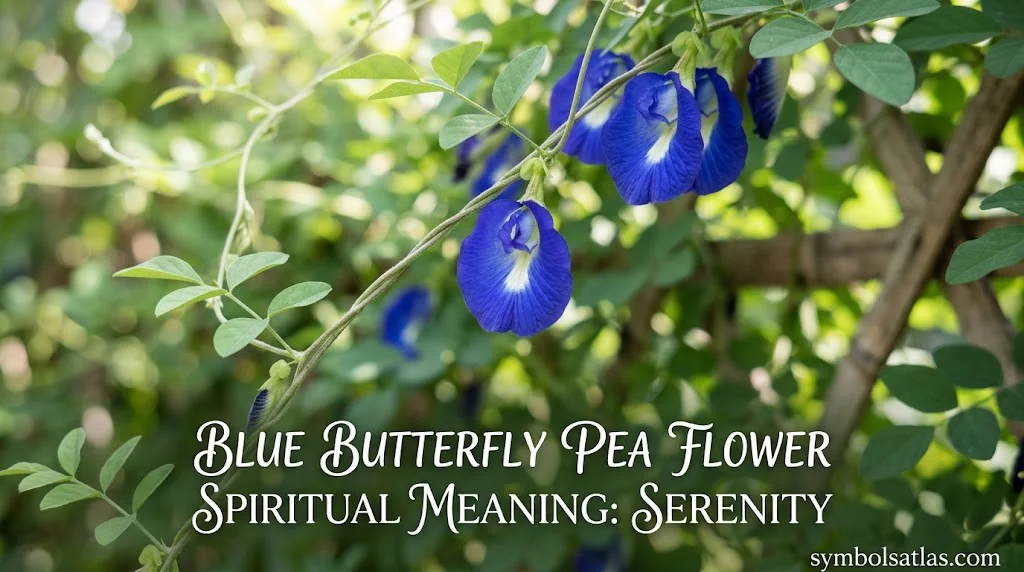
The flower comes from Clitoria ternatea, a climbing plant native to tropical parts of Asia. It has vivid blue petals, often with a pale yellow or white marking near the center, although varieties can differ in color.
Its shape resembles a butterfly with open wings. This appearance naturally invites associations with freedom, lightness, and transformation, even though these meanings aren’t fixed botanical facts.
The flower also produces a rich blue infusion when steeped in hot water. Adding an acidic ingredient, such as lemon juice, can shift the liquid toward purple or pink because its natural pigments respond to changes in acidity.
Why Its Appearance Inspires Spiritual Meaning
Natural symbols often gain meaning through the feelings and ideas they bring to mind. Blue commonly evokes water, open skies, quiet spaces, and emotional steadiness in contemporary American culture.
The butterfly-like shape adds another layer of interpretation. Because butterflies are widely associated with change and renewal, some people extend those associations to the butterfly pea flower.
These connections offer a starting point for personal reflection. They don’t mean the flower carries one universal spiritual message.
Historical Background and Traditional Roots
The butterfly pea flower has a history rooted in tropical Asian environments, traditional plant knowledge, and cultural practices. Understanding this background helps distinguish documented uses from newer spiritual interpretations.
Origins in South and Southeast Asia
Clitoria ternatea has been cultivated and used across parts of South and Southeast Asia for generations. Its flowers have served as natural colorants, while different parts of the plant have appeared in traditional food practices and systems of herbal knowledge.
The plant’s historical importance is primarily botanical, culinary, and traditional. Its exact history varies by region, so broad claims about a single origin story or universal spiritual purpose should be treated carefully.
Traditional Uses and Cultural Context
In several Asian communities, butterfly pea flowers are used to color drinks, rice dishes, and desserts. The flower’s strong blue pigment makes it useful in cooking, while its distinctive appearance adds visual appeal.
The plant also appears in traditional herbal practices. However, traditional use doesn’t establish that every claimed benefit is scientifically proven, and it doesn’t mean the flower was historically understood in the same spiritual way everywhere.
For modern readers, this distinction matters. A plant can have genuine cultural importance without possessing one agreed-upon symbolic meaning.
Ancient Beliefs and Pre-Christian Symbolism
There isn’t strong evidence that the butterfly pea flower had one widely recognized spiritual meaning in ancient pre-Christian Europe or across all ancient civilizations. Its symbolism should therefore not be presented as an established universal ancient tradition.
More general associations between blue, water, the sky, and spiritual reflection occur in different cultural settings. Still, these broader patterns don’t prove that ancient societies assigned the butterfly pea flower itself a particular meaning.
Today, people may combine these general color associations with the flower’s Asian heritage to create personal interpretations. Such interpretations can be meaningful when presented as contemporary reflection rather than documented ancient belief.
Blue Butterfly Pea Flower Symbolism in the USA
In the United States, the flower’s symbolism fits naturally into growing interest in mindfulness, houseplants, botanical beauty, and calming wellness rituals. Its meaning often comes from its color, natural form, and use in quiet everyday activities.
Serenity and Inner Peace
Blue is frequently associated with calmness in American design, advertising, and everyday language. People may connect it with clear skies, peaceful water, and spaces that feel open rather than crowded.
Consequently, the butterfly pea flower can represent a desire for a quieter mind. Someone might keep an image of the bloom nearby as a reminder to breathe, pause, or respond thoughtfully during a stressful day.
Personal Growth and Renewal
The flower’s butterfly-like form can suggest the possibility of change. Its color-changing infusion adds another visual reminder that circumstances and perspectives can shift.
For an American audience, these qualities can support a personal message about moving through uncertainty. The flower may represent learning to adapt without losing a sense of inner stability.
Everyday American Associations
The flower doesn’t have a nationally established symbolic role comparable to the rose or sunflower. Instead, its meaning tends to develop through personal choices, food culture, gardening, and wellness interests.
Common contemporary interpretations include:
- Mindfulness: Making room for quiet moments in a busy routine.
- Emotional balance: Choosing a calmer response instead of acting impulsively.
- Natural beauty: Appreciating vivid colors and the variety of the plant world.
- Fresh beginnings: Viewing change as an opportunity for learning.
- Self-awareness: Creating space to examine feelings, priorities, and personal values.
These associations are flexible rather than official. Someone who encounters the flower through cooking may appreciate it differently from someone who discovers it during meditation.
Spiritual Meanings of the Blue Butterfly Pea Flower
The flower can represent several spiritual ideas, especially when people use nature as a source of reflection. Its meaning depends on the individual’s beliefs, experiences, and reasons for paying attention to it.
Serenity and Spiritual Stillness
Serenity is the most direct interpretation of the flower’s deep blue appearance. Its gentle shape and rich color can remind people of quiet water or an expansive evening sky.
In a personal spiritual practice, the flower may symbolize a return to stillness. It can serve as a visual reminder that peace sometimes begins with a pause rather than an immediate solution.
Intuition and Inner Wisdom
Blue is sometimes linked with communication, awareness, and intuition in contemporary spiritual systems. Some people therefore associate the butterfly pea flower with listening more carefully to their inner thoughts.
This doesn’t mean the flower can predict events or reveal hidden truths. Instead, its symbolism can encourage someone to reflect before making a decision and consider feelings alongside practical information.
Transformation and Adaptability
The flower’s ability to color an infusion blue, purple, or pink under different conditions makes transformation an especially appealing metaphor. The liquid changes appearance while remaining part of the same process.
Spiritually, this may represent growth through changing circumstances. A person can learn new things, reconsider old beliefs, and develop different perspectives without losing their core values.
Gratitude and Connection With Nature
The flower can also symbolize gratitude for the natural world. Its vivid petals show how much beauty can exist in a small, easily overlooked plant.
For people who practice nature-based reflection, the bloom may encourage attention to seasonal changes, gardens, and everyday moments of beauty. This interpretation doesn’t require a specific religious belief.
Read More: Cat Poop on Doorstep Spiritual Meaning: Boundaries
Blue Butterfly Pea Flower Meaning Across Cultures
Color and flower symbolism vary across societies. Although the butterfly pea flower has important traditional uses in Asian regions, its modern spiritual interpretations shouldn’t be assumed to apply equally to every culture.
South and Southeast Asian Connections
In parts of South and Southeast Asia, butterfly pea flowers are familiar through food, traditional plant knowledge, and regional practices. Their use as a natural blue coloring gives them a cultural role that goes beyond their modern wellness image.
Some contemporary spiritual discussions connect the flower with peace, clarity, or personal renewal. However, these interpretations vary, and they shouldn’t be treated as beliefs shared by every community in the region.
Broader Associations With Blue
Blue has many different meanings across the world. In some contexts, it evokes water, protection, devotion, or the heavens, while elsewhere it may suggest sadness, authority, or distance.
These meanings offer useful comparisons, but they don’t create a universal spiritual dictionary. The flower’s significance depends on the traditions and experiences through which people encounter it.
Respectful Cultural Interpretation
When exploring the flower’s meaning, it’s helpful to distinguish cultural history from personal spirituality. Traditional uses deserve recognition without adding unsupported claims about ancient ceremonies or sacred status.
For American readers, appreciating the flower can involve learning about its Asian botanical and culinary background. This approach allows personal symbolism to develop without erasing the plant’s cultural context.
The Psychological Meaning of Blue and Floral Symbols
Flowers can become powerful reminders because people connect sensory experiences with memories, emotions, and personal values. The butterfly pea flower offers a clear example of how color and shape may influence interpretation.
Why Blue Can Feel Calming
Blue often appears in settings designed to feel peaceful, such as bedrooms, gardens, and quiet public spaces. Many people associate it with the sky or water, which can encourage feelings of openness and rest.
However, color responses differ between individuals. A shade that feels soothing to one person may remind another of loneliness, cold weather, or a difficult experience.
Nature and Emotional Reflection
Noticing a flower can interrupt a busy routine and direct attention toward the present moment. This simple shift may help someone identify their feelings instead of reacting automatically.
The flower itself isn’t a proven treatment for stress or emotional difficulties. Its symbolic value lies in how a person uses it as a reminder to pause, reflect, and choose a thoughtful next step.
What It May Represent About Personal Values
Someone drawn to the butterfly pea flower may appreciate calmness, adaptability, creativity, or a closer connection with nature. Yet liking a flower doesn’t reliably reveal a person’s personality or spiritual development.
The most useful question is what the flower means to the individual. Personal associations become more meaningful when they reflect real experiences rather than rigid interpretations imposed from outside.
Blue Butterfly Pea Flower in Meditation and Spiritual Rituals
The flower can become part of a personal practice focused on quiet attention and reflection. In the United States, people may incorporate botanical symbols into meditation, journaling, or simple daily routines.
Using the Flower as a Mindfulness Reminder
A flower or photograph can provide a visual focus during a short pause. Observing its petals, color, and shape may help bring attention away from distractions and toward the present moment.
A simple reflective practice could include:
- Observe the flower’s color and notice the details of its petals.
- Take a few comfortable breaths without forcing a particular feeling.
- Reflect on one situation where a calmer response would help.
- Write down a small action that supports greater balance today.
These steps are optional personal practices, not a ritual required by any established tradition. Their value depends on whether they help the individual reflect meaningfully.
Creating a Personal Intention
Some people connect the flower with an intention, such as patience, openness, or emotional steadiness. Keeping that intention simple makes it easier to remember during everyday challenges.
For example, someone might use the flower as a reminder to listen before responding during a difficult conversation. Another person might associate it with accepting changes that cannot be controlled.
Cultural and Practical Respect
If the flower is used in food or drink, it should be sourced and prepared appropriately. Spiritual interest doesn’t remove the need to consider allergies, ingredient quality, or other practical concerns.
Also, people shouldn’t assume that using the flower reproduces a traditional religious ceremony. Personal reflection and culturally specific practices are different things, even when both involve the same plant.
Blue Butterfly Pea Flower in Tattoos, Art, and Home Decor
The flower’s unusual color makes it appealing in visual design. Its symbolism can be expressed through botanical illustrations, personal artwork, tattoos, and peaceful home settings.
Tattoos and Personal Identity
A butterfly pea flower tattoo may express a preference for serenity, personal growth, or natural beauty. The design can be subtle, using a single blue blossom, or more detailed, combining leaves and vines.
Some people may pair the flower with a butterfly, water, or a crescent moon to represent change and reflection. These combinations are individual artistic choices rather than fixed traditional meanings.
Home Decor and Gardens
In a home, botanical artwork can create a connection with the natural world. Blue floral designs may also complement spaces intended for reading, journaling, or relaxation.
Growing the plant can offer a more direct way to appreciate its form. As a climbing tropical plant, however, it needs suitable growing conditions, so gardeners should consider their local climate and available light.
Social Media and Digital Expression
On social platforms, the flower’s vivid blue infusion photographs well and can support content about gardening, creative drinks, or mindful living. Purple and pink color changes also make it visually interesting.
People may use the flower as a symbol of a peaceful lifestyle or a fresh start. These online meanings reflect personal presentation and current trends, not necessarily longstanding cultural traditions.
Blue Butterfly Pea Flower Meaning in Dreams and Signs
Some people interpret flowers that appear in dreams or repeated encounters as prompts for personal reflection. The butterfly pea flower can fit into this practice, especially when its color or appearance feels memorable.
Seeing the Flower in a Dream
A blue butterfly pea flower in a dream might remind someone of calmness, growth, or a need for reflection. Its meaning may depend on the dream’s setting and the feelings it brings up.
There isn’t reliable evidence that this flower predicts future events. Instead, a dream can be an opportunity to explore current concerns, hopes, or memories.
Repeatedly Noticing the Flower
Encountering the flower several times may feel meaningful, particularly after learning about its symbolism. One possible explanation is that the mind becomes more attentive to something recently noticed.
A person can still use the experience as a personal reminder. The important distinction is between choosing a helpful interpretation and assuming that an outside force has definitely sent a message.
Questions for Personal Reflection
If the flower feels significant, consider asking:
- What was happening in my life when I first noticed it?
- Does its blue color remind me of a particular place or experience?
- Am I looking for more calm, flexibility, or clarity right now?
- What practical step could support the quality I associate with it?
These questions leave room for spirituality while respecting individual judgment and everyday reality.
Blue Butterfly Pea Flower Symbolism at a Glance
The flower can represent different ideas depending on how someone encounters it. This overview separates common modern interpretations from the plant’s documented characteristics and traditional uses.
Common Meanings and Their Contexts
| Context | Meaning in the USA | Common Associations | Important Note |
| Blue petals | Serenity and calmness | Sky, water, quiet reflection | A personal color association |
| Butterfly-like shape | Change and freedom | Growth, renewal, possibility | Not a universal cultural meaning |
| Color-changing tea | Adaptability and transformation | Creativity, flexibility, curiosity | Caused by changes in acidity |
| Garden or artwork | Connection with nature | Beauty, patience, appreciation | Meaning depends on the individual |
| Meditation or journaling | Self-awareness | Mindfulness, reflection, balance | An optional personal practice |
Which Meaning Is Most Relevant?
Serenity is a natural starting point if you’re drawn to the flower’s deep blue color. However, its butterfly-like form may make transformation more meaningful to someone experiencing a major life change.
The most useful interpretation is the one that supports thoughtful reflection without creating unnecessary fear or unrealistic expectations.
Misunderstandings and Controversies About Its Spiritual Meaning
Spiritual symbolism can be meaningful, but confusion develops when personal interpretations are presented as established facts. The butterfly pea flower is a good example of why cultural history and modern spiritual ideas should remain distinct.
Is the Flower an Ancient Spiritual Symbol?
The flower has a long history of traditional use in Asia, but that doesn’t establish a single ancient spiritual meaning. Claims that it has always represented serenity, divine communication, or spiritual awakening require reliable historical evidence.
Likewise, the flower shouldn’t automatically be described as sacred to every Asian religion. Traditions differ, and a plant’s cultural importance in one setting doesn’t establish its role in another.
Does the Flower Guarantee Peace or Good Luck?
Some modern interpretations connect blue flowers with harmony, good fortune, or positive change. These ideas may offer comfort, but there’s no reliable evidence that the butterfly pea flower guarantees a particular outcome.
Instead, consider using its symbolism as encouragement. A reminder to remain calm can influence your choices, but the flower itself doesn’t control your circumstances.
Avoiding Unsupported Health Claims
The butterfly pea flower is sometimes promoted in wellness settings because of its traditional uses and natural pigments. However, symbolic meaning should not be confused with proven health benefits.
Drinking a flower infusion doesn’t guarantee emotional balance, spiritual awakening, or freedom from stress. Anyone interested in its use as a food or herbal product should consider reliable safety information rather than relying on spiritual claims alone.
How the Flower’s Meaning Has Changed Over Time
The butterfly pea flower’s story includes practical plant uses, regional traditions, and newer interpretations influenced by global wellness culture. Its contemporary spiritual meaning is best understood as an evolving collection of associations.
From Practical Plant to Modern Symbol
Historically, the flower was valued in many settings for its color and traditional uses. Its vivid pigment made it useful in preparing foods and drinks, while the plant itself belonged to familiar local environments.
As botanical ingredients became more visible in international food culture, the flower gained attention beyond its traditional growing regions. Its striking appearance and color-changing properties helped inspire fresh associations with creativity and change.
The Influence of Contemporary Wellness Culture
In modern American wellness spaces, flowers are often used as visual reminders of mindfulness, self-care, and connection with nature. The butterfly pea flower fits this trend because its color and form are easy to incorporate into drinks, artwork, and personal rituals.
Social media can also spread symbolic interpretations quickly. However, a meaning repeated online isn’t automatically an ancient tradition or a belief shared by an entire culture.
What Has Stayed Consistent?
The flower’s physical qualities remain the foundation of its appeal. Its blue petals, distinctive shape, and natural pigments continue to inspire curiosity and appreciation.
The meanings attached to those qualities can change. Serenity and transformation are useful modern interpretations, but they shouldn’t replace the plant’s botanical history or the diversity of its cultural uses.
FAQs About the Blue Butterfly Pea Flower Spiritual Meaning
What does the blue butterfly pea flower symbolize spiritually?
The flower is commonly associated with serenity, intuition, emotional balance, and transformation in modern spiritual interpretations. Its blue color and butterfly-like shape help inspire these meanings, although no single interpretation applies to everyone.
Is the butterfly pea flower associated with peace?
Yes, some people associate its blue petals with peace and calmness. This connection reflects common color symbolism and personal interpretation rather than a universal religious teaching.
Does the blue butterfly pea flower symbolize transformation?
It can symbolize transformation because of its butterfly-like shape and the way its infused color changes with acidity. People may use these features as metaphors for adaptability, growth, and changing perspectives.
Does butterfly pea flower have an ancient spiritual meaning?
The plant has a long history of traditional use in South and Southeast Asia. However, claims that it possessed one universal ancient spiritual meaning aren’t well established, so it’s important to distinguish documented history from modern interpretations.
What does it mean to see a blue butterfly pea flower in a dream?
Some people interpret the flower in a dream as a reminder of calmness, self-awareness, or personal growth. Dreams don’t provide reliable predictions, but reflecting on your emotions and current experiences may help you explore what the image means to you.
Can I use the butterfly pea flower during meditation?
You can use the flower as a visual focus or a reminder of a personal intention. For example, observing its color may encourage you to pause, breathe comfortably, and reflect on how you want to approach the day.
Conclusion
The blue butterfly pea flower’s spiritual meaning centers on serenity, emotional balance, intuition, and transformation in many modern interpretations. Its deep blue petals invite thoughts of peaceful surroundings, while its distinctive shape and color-changing infusion offer reminders of growth and adaptability. Its traditional uses in South and Southeast Asia also provide an important cultural background for appreciating the plant.
Ultimately, the flower doesn’t need a fixed spiritual meaning to become personally significant. You might see it as a reminder to slow down, appreciate nature, or approach change with patience. Let its beauty encourage reflection, and choose the meaning that supports a thoughtful, balanced approach to everyday life.