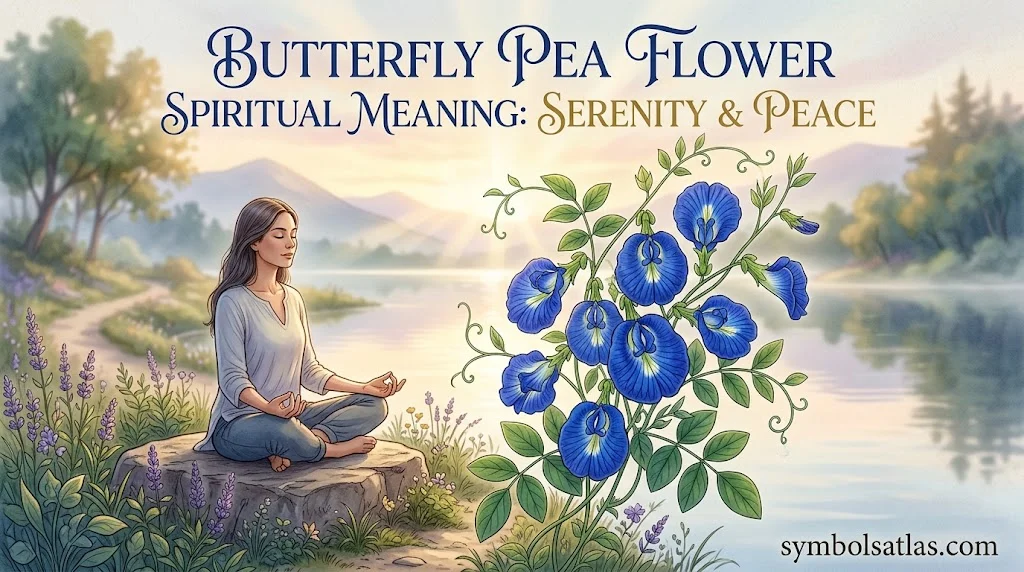

Discover the butterfly pea flower spiritual meaning, from serenity and inner peace to transformation, intuition, and the beauty of life’s changes.
The butterfly pea flower spiritual meaning is often connected with serenity, inner peace, transformation, and spiritual awareness. Known for its vivid blue petals, this delicate flower stands out in gardens, traditional drinks, and nature-inspired designs. Its striking color and ability to change when exposed to acidic ingredients make it a meaningful symbol of change and possibility. In the United States, people may connect this flower with mindfulness, personal growth, and a calmer lifestyle.
Although it doesn’t have one universally established spiritual meaning, its appearance offers several thoughtful ways to explore life’s changes. Its blue color can suggest stillness, while its natural transformation can represent flexibility and renewal. The butterfly pea flower also has cultural roots in South and Southeast Asia, where it has long been appreciated for its beauty and traditional uses. Today, its popularity in teas, wellness culture, gardens, and social media has introduced it to more American audiences. Understanding its symbolism means looking at its natural features, cultural history, emotional associations, and modern interpretations without assuming every meaning belongs to an ancient tradition.
Quick Answer
The butterfly pea flower spiritual meaning in the United States is commonly interpreted through serenity, emotional balance, transformation, and mindful living. Its deep blue petals can symbolize calmness and reflection, while its color-changing properties offer a memorable reminder that change can reveal new possibilities.
TL;DR
- Blue petals can represent serenity, reflection, and peaceful energy.
- Color changes may symbolize transformation, adaptability, and fresh perspectives.
- The flower has established cultural connections in South and Southeast Asia.
- American wellness culture often associates it with mindfulness and natural beauty.
- Its spiritual meanings are personal interpretations, not universal religious teachings.
- Gardens, artwork, and tea rituals can express its symbolism in everyday life.
What Is the Butterfly Pea Flower?
The butterfly pea flower is a climbing plant scientifically known as Clitoria ternatea. It produces distinctive blue flowers, although some varieties have white or other color variations. Its unusual shape and vivid petals make it recognizable in gardens and traditional preparations.
Appearance and Natural Features
The flower’s most familiar form has rich blue petals, often with a lighter central area. Its shape resembles a small butterfly resting on a vine, which helps explain its common English name.
Several natural features contribute to its symbolic appeal:
- Blue petals: Often associated with calmness, trust, and contemplation.
- Butterfly-like shape: Can suggest freedom, change, and new beginnings.
- Climbing growth: May represent persistence, flexibility, and reaching toward opportunities.
- Color-changing infusion: Offers a visual example of how surroundings can influence appearances.
These associations are interpretations rather than scientifically established spiritual properties. However, they can provide a meaningful starting point for personal reflection.
Why Its Color Matters
Blue is widely associated with the sky, water, and expansive natural spaces. In everyday American culture, it can evoke peacefulness, openness, and emotional steadiness.
The butterfly pea flower’s blue infusion can also change toward purple or pink when an acidic ingredient, such as lemon juice, is added. This visible shift makes the flower especially useful as a metaphor for perspective, adaptation, and transformation.
Historical Origins and Cultural Background
The butterfly pea flower has a longer cultural history than its recent popularity in American cafés might suggest. Understanding that background helps distinguish established traditional uses from newer spiritual interpretations.
Roots in South and Southeast Asia
The plant is native to tropical regions of Asia and is widely associated with South and Southeast Asian traditions. It has been cultivated for its flowers, ornamental beauty, and uses in traditional food and drink.
In parts of Thailand and neighboring regions, the blue petals have been used to color drinks and foods. The flower has also appeared in traditional herbal practices, although historical use should not be confused with proof of medical effectiveness.
Traditional Knowledge and Spiritual Interpretation
Plants have long held cultural importance because of their colors, shapes, seasonal patterns, and practical uses. However, not every plant used in a traditional setting has a single documented spiritual meaning.
For the butterfly pea flower, its cultural history is better established through cultivation, food preparation, and traditional uses than through a universal doctrine of serenity. Modern spiritual interpretations often build on its natural beauty and color rather than one shared ancient teaching.
Was It an Ancient Symbol of Serenity?
There isn’t strong evidence that the butterfly pea flower has represented serenity in every ancient civilization or spiritual tradition. Claims that it universally symbolizes enlightenment, divine protection, or a particular spiritual power should therefore be treated cautiously.
Instead, its spiritual meaning can be understood as a combination of cultural context and personal symbolism. This approach respects its history without inventing traditions that may never have existed.
Butterfly Pea Flower Spiritual Meaning in America
In the United States, the butterfly pea flower is increasingly recognized through specialty beverages, gardening, and nature-inspired wellness practices. Its spiritual meaning often reflects personal values rather than a specific American religious tradition.
Serenity in Everyday American Life
Many Americans associate blue flowers with peaceful surroundings and emotional balance. Because the butterfly pea flower has such a rich blue color, it can fit naturally into practices centered on slowing down and appreciating the present.
For example, someone might keep the flower in a garden as a reminder to approach daily challenges patiently. Another person might use its image in a journal to represent a desire for greater calm.
Personal Growth and New Beginnings
The flower can also represent the willingness to grow through changing circumstances. Its climbing habit and color-changing infusion offer two natural images of flexibility.
In American culture, where personal development and self-discovery are common themes, the flower may symbolize:
- Finding calm during a busy season of life.
- Remaining open to unfamiliar experiences and ideas.
- Embracing personal changes without losing one’s values.
- Creating a peaceful environment for reflection and creativity.
- Appreciating small moments instead of constantly chasing future goals.
These meanings are personal choices, not official national symbols. Their value comes from the connection people make between the flower and their own experiences.
Spiritual Symbolism of Blue Butterfly Pea Flowers
Blue is one of the flower’s most distinctive features, making it central to many modern interpretations. Its color can encourage reflection on peace, communication, trust, and the relationship between thoughts and feelings.
Blue as a Symbol of Peace
In many contemporary settings, blue suggests open skies, flowing water, and quiet spaces. These associations can make the butterfly pea flower a reminder to seek steadiness during stressful or uncertain periods.
However, blue doesn’t mean exactly the same thing to everyone. Personal memories, cultural backgrounds, and individual experiences can influence how someone responds to the color.
Blue as a Symbol of Intuition
Some modern spiritual practices associate blue with intuition, insight, and thoughtful communication. Within these interpretations, the flower can serve as a reminder to listen carefully to personal feelings while considering situations realistically.
It doesn’t prove that someone has received a supernatural message. Instead, it can provide a meaningful focus for meditation, journaling, or quiet reflection.
What the Flower’s Blue Color May Represent
| Symbolic feature | Common interpretation | Personal reflection |
| Deep blue petals | Peace and serenity | Where could I welcome more calm? |
| Lighter center | Clarity and openness | What deserves my attention? |
| Natural growth | Patience and persistence | How can I grow at my own pace? |
| Changing blue infusion | Adaptability and transformation | What new perspective might help me? |
These interpretations are starting points rather than fixed spiritual rules. You can choose the meaning that best reflects your circumstances.
The Spiritual Meaning of Color Transformation
One of the butterfly pea flower’s most fascinating qualities is its response to changes in acidity. When lemon juice is added to its blue infusion, the color can shift toward purple or pink, depending on the ingredients and conditions.
This transformation provides a natural metaphor for changing perspectives. It also helps explain why the flower appeals to people interested in symbolism, creativity, and personal growth.
Embracing Change Without Fear
Change can feel uncomfortable when familiar circumstances begin to shift. The flower offers a gentle image of how something can look different when its environment changes.
Spiritually, this may represent the idea that a new situation can reveal possibilities that weren’t previously visible. It doesn’t mean every change will be positive, but it encourages curiosity rather than immediate resistance.
Seeing Situations From Another Perspective
The color shift also suggests that context influences what we notice. A situation that first appears confusing may become easier to understand after gaining new information or considering another viewpoint.
You might use the flower as a reminder to:
- Pause before judging an unfamiliar situation.
- Remain curious when your plans change.
- Learn from experiences that challenge your assumptions.
- Recognize that personal growth often happens gradually.
This interpretation works well for journaling and mindfulness because it turns an ordinary natural process into a question about everyday life.
Butterfly Pea Flower Meaning Across Cultures and Spiritual Traditions
The flower’s cultural background deserves attention because its traditional uses extend beyond contemporary American wellness trends. Its meaning can differ depending on regional practices, religious contexts, and personal beliefs.
South and Southeast Asian Connections
In parts of South and Southeast Asia, butterfly pea flowers have a familiar place in traditional food, beverages, gardens, and plant-based knowledge. In Thailand, for example, the flowers are used to create striking blue drinks and colorful dishes.
These established uses demonstrate the flower’s cultural and practical importance. However, its culinary role doesn’t automatically establish one shared spiritual meaning across the region.
Hindu Traditions and Sacred Associations
The plant is known in some Indian contexts by names such as aparajita. The name is associated with the idea of being unconquered, and the flower appears in certain devotional and ritual settings.
Its significance depends on the specific tradition, deity, region, and practice involved. Therefore, it’s important not to reduce all Hindu interpretations to serenity or assume every use carries the same religious meaning.
Broader Spiritual Interpretations
Outside its traditional cultural settings, people may connect the flower with broader themes:
- Mindfulness: Paying attention to the present moment.
- Renewal: Recognizing opportunities for a fresh beginning.
- Harmony: Seeking balance between different parts of life.
- Adaptability: Responding thoughtfully to changing circumstances.
- Beauty: Appreciating the natural world without needing a special explanation.
These broader meanings are modern interpretive possibilities. They shouldn’t be presented as universal teachings shared by all cultures or religions.
Read More: Hearing a Snake Hiss Spiritual Meaning: Warning and Intuition
Emotional and Psychological Associations
Flowers can influence how people experience a space, remember an event, or express a feeling. The butterfly pea flower’s vivid color and delicate shape may encourage emotions associated with calmness, curiosity, and appreciation.
A Reminder to Slow Down
A peaceful garden or a carefully prepared drink can create a small pause in a busy day. For some people, the butterfly pea flower becomes part of that experience because its color invites attention.
The symbolism comes from the moment and the meaning attached to it. The flower itself doesn’t guarantee emotional balance or produce a specific psychological response in everyone.
A Symbol of Emotional Flexibility
The flower’s color change can represent the ability to respond to new experiences without abandoning personal values. This is especially meaningful when someone is navigating a transition, learning a new skill, or adjusting to an unfamiliar environment.
Rather than expecting yourself to remain calm at all times, consider the flower a reminder that feelings and circumstances naturally change. Reflection can help you respond with greater awareness.
What It May Say About Personal Values
Someone drawn to this flower might appreciate nature, creativity, simplicity, or personal growth. However, liking a particular flower doesn’t establish a person’s personality or spiritual abilities.
Its meaning becomes more useful when connected to a real intention. For example, you might choose it to represent patience during a challenging project or curiosity during a new chapter of life.
Butterfly Pea Flower in Dreams
Dream interpretations are personal and vary across cultures. There isn’t one verified meaning for dreaming about a butterfly pea flower, but its color and appearance can inspire several reflective possibilities.
Seeing a Blue Flower in a Dream
A blue butterfly pea flower might remind you of peace, beauty, or a situation that deserves more attention. If the flower appears in a pleasant setting, you could reflect on what currently brings you a sense of ease.
However, the dream doesn’t necessarily predict an event or deliver a supernatural message. Your personal associations with flowers and blue colors may be more relevant than a universal dream dictionary.
Watching the Color Change
A changing flower or blue drink could inspire thoughts about transitions, unexpected discoveries, or changing opinions. Consider whether something in your waking life feels different from how it first appeared.
You can explore the dream by asking yourself:
- What emotions did I experience during the dream?
- What changes have recently occurred in my life?
- Does the flower remind me of a particular person or place?
- What might I understand differently today?
These questions encourage reflection without treating dreams as certain predictions.
Modern Uses in Tattoos, Home Decor, and Social Media
The butterfly pea flower’s recognizable shape and vibrant blue color make it suitable for modern visual expression. In the United States, floral imagery often appears in tattoos, artwork, interior design, and online posts.
Butterfly Pea Flower Tattoos
A butterfly pea flower tattoo can represent serenity, transformation, natural beauty, or a meaningful personal memory. Some people may choose its blue petals to reflect peacefulness, while others may appreciate its changing colors.
Possible design approaches include:
- A single blue flower for simplicity and calm.
- A climbing vine to represent steady personal growth.
- Blue and purple petals to suggest transformation.
- A botanical illustration celebrating nature and cultural heritage.
- A flower paired with a butterfly to emphasize change.
These meanings aren’t fixed. If the design connects to a specific cultural or religious tradition, researching that context can help you represent it respectfully.
Home Decor and Gardens
The flower can inspire botanical prints, garden arrangements, textiles, and other nature-themed decorations. Its blue color may complement spaces designed around quietness, reflection, or natural beauty.
Growing the plant can also make its symbolism more personal. Watching a vine develop over time may remind you that growth often requires patience, attention, and suitable conditions.
Social Media and Digital Expression
On social media, butterfly pea flower drinks and color-changing recipes can become visual expressions of creativity and curiosity. A photograph of a blue infusion turning purple may accompany a caption about change or new beginnings.
The flower may also appear in wellness-themed posts, nature photography, and artistic designs. However, a social media caption is a personal interpretation, not proof of an ancient spiritual belief.
How to Use the Flower as a Symbol of Serenity
You don’t need to follow a particular spiritual tradition to appreciate the butterfly pea flower’s symbolism. A simple, intentional connection with nature can make its meaning relevant to everyday life.
Create a Personal Reflection Practice
Choose a flower, illustration, or photograph that reminds you of calmness. Spend a few quiet moments observing its color and shape, then consider what serenity means in your current circumstances.
You could write a sentence about one thing you want to approach with greater patience. Keep the exercise flexible rather than treating it as a ritual that must produce a particular result.
Bring the Symbol Into Everyday Life
The flower can become a small reminder of your values through ordinary activities.
- Place botanical artwork somewhere you enjoy spending quiet time.
- Grow a suitable variety if your climate and space allow.
- Use flower imagery in a journal about personal development.
- Photograph its changing infusion as a creative reminder of adaptability.
- Share its cultural background when discussing its beauty with others.
These activities give the symbol a practical role without requiring supernatural claims.
Appreciate the Flower Responsibly
If you plan to consume butterfly pea flower products, choose reputable food-grade products and follow their preparation instructions. Traditional use doesn’t mean a plant is suitable for everyone or every circumstance.
Most importantly, separate symbolic meaning from claims about health, energy, or spiritual powers. You can appreciate the flower’s beauty and personal significance without assuming it provides guaranteed benefits.
Misunderstandings and Changing Interpretations
As butterfly pea flower imagery becomes more familiar to new audiences, its meanings can expand beyond traditional uses. This creates opportunities for appreciation, but it can also lead to unsupported claims.
Not Every Meaning Is Ancient
Some online descriptions present serenity, intuition, protection, and spiritual awakening as established ancient meanings of the flower. These claims may reflect modern spiritual interpretations rather than documented historical traditions.
It’s more accurate to distinguish known cultural practices from meanings people have developed more recently. Doing so preserves the flower’s cultural background while allowing room for personal symbolism.
Color Changes Aren’t Supernatural Proof
The flower’s shift from blue toward purple or pink has a chemical explanation. Acidity changes the pigments’ appearance, producing a visible effect that can be fascinating without requiring a supernatural cause.
You can still use the change as a spiritual metaphor. A natural explanation and a personal symbolic meaning can coexist, provided they’re not confused with each other.
Respect Cultural Context
The flower has meaningful associations in parts of Asia, including traditional food practices and certain devotional settings. Treating it only as a trendy wellness ingredient can overlook that background.
At the same time, not every modern use is disrespectful. Learning the plant’s history, naming specific traditions accurately, and avoiding invented religious claims are useful ways to appreciate it.
How Its Meaning Has Evolved
The butterfly pea flower has moved between practical, ornamental, culinary, and contemporary lifestyle settings. As it reaches new audiences, its blue color and changing infusion inspire interpretations that may not have been central to its earlier uses.
Its meaning is therefore not frozen in time. The most responsible approach is to recognize established cultural history while identifying newer interpretations as personal or contemporary symbolism.
FAQs
What Does the Butterfly Pea Flower Symbolize Spiritually?
The flower can symbolize serenity, transformation, adaptability, and reflection. These meanings are common modern interpretations based on its blue color and changing infusion, rather than universal spiritual rules.
Is the Butterfly Pea Flower a Symbol of Peace?
It can be used as a symbol of peace because blue is often associated with calmness and open spaces. However, the flower doesn’t have one universally accepted meaning across every culture.
What Does a Blue Butterfly Pea Flower Mean?
A blue butterfly pea flower may represent tranquility, thoughtful communication, or personal reflection. Its meaning depends on the context and the associations someone brings to it.
What Does It Mean When Butterfly Pea Tea Changes Color?
The color changes because the flower’s pigments respond to acidity. Symbolically, people may interpret this as adaptability, new perspectives, or transformation, but the physical process itself is chemical.
Is the Butterfly Pea Flower Considered Sacred?
The flower has devotional and ritual associations in certain cultural and religious contexts, including some Indian traditions. However, it isn’t universally considered sacred, and its significance varies by community and practice.
Can I Use Butterfly Pea Flower Imagery for Meditation?
Yes. You can use its image as a personal focus for reflection, calmness, or appreciation of nature. This is an optional personal practice, not a requirement of any spiritual tradition.
Conclusion
The butterfly pea flower spiritual meaning offers a thoughtful way to explore serenity, personal growth, and transformation. Its vivid blue petals suggest calmness, while its changing infusion provides a natural reminder that circumstances and perspectives can shift. Its cultural history in South and Southeast Asia adds depth beyond its modern popularity in American gardens, drinks, and creative designs.
At the same time, its spiritual interpretations should be distinguished from documented traditions and the science behind its changing colors. Ultimately, the flower’s meaning depends on the connection you make with it. Whether you appreciate it in a garden, a photograph, or a cup of blue tea, let its beauty remind you to pause, remain curious, and welcome life’s changes with an open mind.