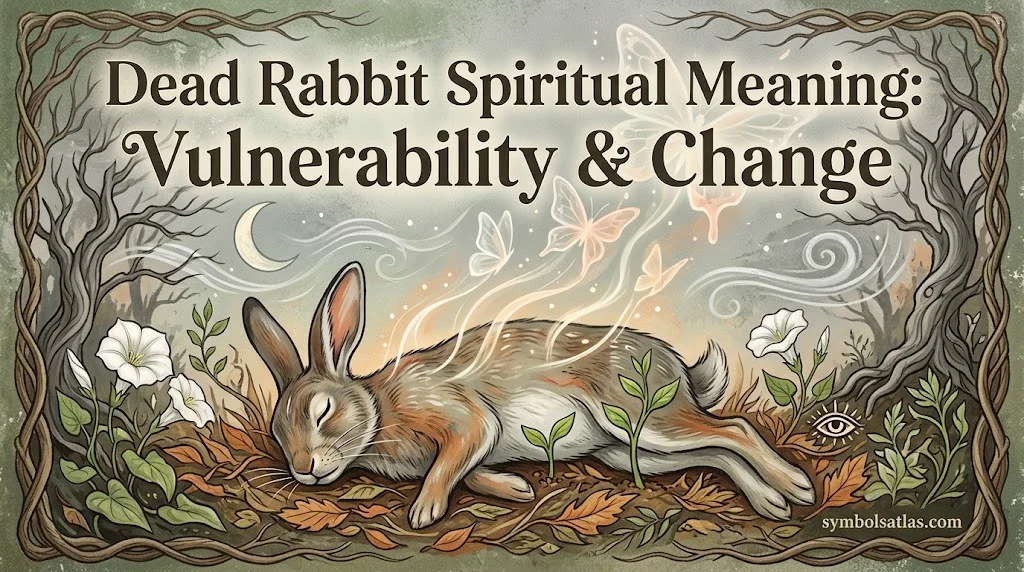

Finding a dead rabbit can feel unsettling, but its presence may carry deeper spiritual symbolism. The spiritual meaning of a dead rabbit often connects with vulnerability, unexpected endings, emotional healing, and personal transformation.
Rabbits commonly symbolize innocence, fertility, gentleness, and new beginnings in different cultures. However, encountering a dead rabbit can represent a different side of life, reminding us that change and loss are natural experiences. Spiritually, this encounter may encourage you to recognize your emotional vulnerability, release old situations, and accept unexpected changes. It can also symbolize the ending of a difficult chapter and the beginning of personal growth. Although some people associate dead rabbits with bad luck, their meaning isn’t always negative. Instead, this experience can invite reflection, patience, and a deeper understanding of life’s fragile nature.
In American culture, rabbits are widely associated with spring, renewal, hope, and innocence, making their death a powerful symbolic contrast. The experience may remind you to appreciate life’s temporary moments and recognize the importance of emotional strength. From a spiritual perspective, a dead rabbit can represent letting go of the past, accepting uncertainty, and finding meaning through difficult experiences. Whether you discover one in your yard, near your home, or along a road, its symbolism can encourage thoughtful reflection. Understanding these interpretations can help you explore personal transformation, emotional awareness, and the natural cycles of life without assuming that every encounter is a negative sign.
Quick Answer
The Spiritual Meaning of a Dead Rabbit commonly represents vulnerability, unexpected endings, emotional healing, and transformation. In the United States, where rabbits often symbolize innocence and renewal, a dead rabbit can serve as a personal reminder that life involves change, loss, and new beginnings.
TL;DR
- Vulnerability: A dead rabbit can represent emotional sensitivity and feeling exposed.
- Endings: It may symbolize the closing of an important life chapter.
- Transformation: Its appearance can encourage personal growth and meaningful change.
- Innocence: It may reflect lost innocence or changing expectations.
- Emotional Healing: The encounter can inspire reflection, acceptance, and inner strength.
- Renewal: Death in nature can remind us of life’s continuing cycles.
Overview of Dead Rabbit Symbolism
A dead rabbit carries different symbolic associations from a living rabbit. While living rabbits often represent fertility and abundance, their death introduces themes of fragility, loss, and change. Understanding this contrast helps explain why the encounter can feel emotionally powerful.
What Does a Dead Rabbit Represent?
A dead rabbit can represent several symbolic ideas:
- Lost innocence: Leaving behind an earlier, more carefree stage of life.
- Emotional vulnerability: Recognizing feelings that you’ve previously ignored.
- Unexpected endings: Accepting situations that change without warning.
- Personal transformation: Making room for a different direction in life.
- Fragile opportunities: Understanding that some chances require attention and care.
These meanings aren’t universal spiritual rules. Instead, they offer different ways to understand an experience through personal reflection.
Why Does Its Appearance Matter?
The rabbit’s appearance and surroundings can influence your personal interpretation. For example, a rabbit found beside a road might remind someone of life’s unpredictability.
Similarly, discovering one near your home could bring attention to feelings of safety, family, or personal space. However, these associations are symbolic rather than established spiritual facts.
Spiritual Meaning of Dead Rabbit in Different Situations
The circumstances surrounding a dead rabbit can shape the meaning someone personally attaches to the encounter. In American spiritual traditions, people often interpret unusual experiences through their emotions, surroundings, and personal beliefs.
Finding a Dead Rabbit on Your Property
Finding a dead rabbit in your yard may encourage reflection on your personal environment. Symbolically, it can represent changes happening within your home or private life.
It may also remind you to pay attention to relationships and responsibilities that need care. However, the encounter doesn’t establish that something negative will happen to your family.
Seeing a Dead Rabbit on the Road
A dead rabbit on the road can symbolize unexpected interruptions or changes in direction. Roads often represent movement, decisions, and the journey through life.
Therefore, this encounter might encourage you to reconsider your current direction. It can also remind you that not everything happens according to your expectations.
Finding a Dead Rabbit Near Your Door
A doorway represents a transition between different spaces. Consequently, a dead rabbit near your entrance may symbolize a personal transition or the closing of an old chapter.
For some people, this image encourages reflection before entering a new stage. Its meaning depends on the feelings and circumstances connected to the experience.
Seeing a Dead Rabbit in Your Garden
Gardens commonly represent growth, patience, and nurturing. A dead rabbit in this setting creates a contrast between natural development and loss.
Symbolically, it may encourage you to reconsider what deserves your attention. It can also represent the need to accept that some things cannot grow forever.
Historical Origins of Rabbit Symbolism
Rabbits and hares have carried symbolic importance for thousands of years. Their associations with fertility, life, and renewal developed through folklore, ancient beliefs, religious art, and everyday observations.
Ancient and Pre-Christian Associations
In ancient European traditions, hares sometimes appeared in ritual burials. Researchers have interpreted some of these practices as possible connections with rebirth and the afterlife.
In ancient Greek traditions, hares were associated with Aphrodite and Eros. These figures connected the animal with love, desire, and fertility.
The animal’s remarkable reproductive ability also made it a natural symbol of abundance. However, these historical associations generally concerned living rabbits and hares rather than dead ones.
Rabbit Symbolism in Medieval Europe
During medieval times, rabbits appeared in religious paintings, manuscripts, and decorative artwork. Their meanings sometimes included purity, fertility, and innocence.
White rabbits also appeared in Christian artwork alongside the Virgin Mary. These images could communicate ideas about purity and overcoming temptation.
However, rabbit symbolism wasn’t always consistent. Different artists and communities assigned different meanings depending on their beliefs and traditions.
How Rabbit Symbolism Reached America
European settlers brought various rabbit traditions to North America. German immigrants, particularly in Pennsylvania, helped introduce the Easter Hare tradition during the 18th century.
Over time, this character became the familiar American Easter Bunny. Today, rabbits remain closely connected with childhood, spring celebrations, decorated eggs, and fresh beginnings.
These historical traditions help explain why encountering a dead rabbit can feel especially unusual. It contrasts with the cheerful associations many Americans learned during childhood.
Read More: Spiritual Meaning of Dog Licking Me: Love and Healing
Dead Rabbit Symbolism in American Culture
In the United States, rabbits have strong connections with family traditions, entertainment, holidays, and popular culture. Their familiar image makes their death an emotionally striking symbol.
The Connection With Easter and New Life
The Easter Bunny is one of America’s most recognizable rabbit symbols. It represents springtime celebrations, childhood excitement, and the arrival of new life.
A dead rabbit creates a different emotional picture. Instead of abundance and celebration, it may bring thoughts about mortality, change, and the temporary nature of life.
The contrast doesn’t mean that Easter traditions predict or explain the death of a rabbit. These are separate cultural associations.
Rabbits in American Folklore
Rabbits also appear in American folk beliefs about luck and protection. Rabbit’s feet became popular good-luck charms in American culture, although their history involves complicated cultural influences.
The tradition has connections with African American folk practices and later commercial exploitation. Some historical accounts also describe racialized advertising surrounding rabbit’s-foot charms.
Therefore, rabbit symbolism in America isn’t limited to innocence or fertility. It also reflects folklore, cultural exchange, and changing social attitudes.
American Associations With Vulnerability
Many Americans associate rabbits with small, gentle, and easily frightened animals. Their natural behavior makes them familiar symbols of sensitivity.
A dead rabbit can therefore represent the vulnerability that exists beneath outward strength. It may encourage people to recognize emotional needs instead of hiding them.
Dead Rabbit Spiritual Meaning Across Different Cultures
Different cultures have developed their own relationships with rabbits and hares. Their symbolism can involve fertility, protection, wisdom, transformation, and connections with nature.
However, there isn’t one universal interpretation of a dead rabbit. Its meaning depends on the particular tradition and personal beliefs involved.
Native American Rabbit Symbolism
Rabbit figures appear in several Native American storytelling traditions. Their roles vary between nations and individual stories.
For example, some Southeastern traditions feature Rabbit as a clever trickster character. These stories can explore intelligence, survival, humor, and the consequences of certain actions.
A dead rabbit doesn’t have one shared meaning across Native American cultures. It would be inaccurate to assign a single spiritual interpretation to all Indigenous traditions.
Eastern Spiritual Traditions
In Chinese tradition, the rabbit is associated with the Moon and the Jade Rabbit. This figure appears in stories connected with medicine, longevity, and lunar symbolism.
In Japanese folklore, rabbits also have important connections with the Moon. One familiar story depicts a rabbit making rice cakes on the lunar surface.
These traditions generally celebrate the rabbit rather than treating its death as a specific omen. Personal interpretations of death and change should remain separate from established cultural stories.
European Folklore and Spiritual Beliefs
European folklore sometimes connected rabbits and hares with fertility, seasonal change, and supernatural stories.
In some traditions, hares were also associated with transformation and mysterious nighttime activity. These associations developed differently across regions.
A dead rabbit may therefore inspire thoughts about the ending of an old cycle. However, this is a modern symbolic interpretation, not a universal European belief.
Psychological Meaning of Seeing a Dead Rabbit
Sometimes, the strongest meaning of an encounter comes from your emotional response. A dead rabbit can bring feelings of sadness, discomfort, helplessness, or concern.
Understanding these reactions can help you explore what the experience represents personally.
Feelings of Vulnerability
Rabbits are often viewed as delicate animals. Seeing one dead can remind people of their own emotional sensitivity.
Perhaps you’ve recently experienced disappointment or felt unable to protect something important. The encounter might bring those feelings into focus.
Fear of Unexpected Change
An unexpected death can remind us that life doesn’t always follow a predictable path. This may connect with uncertainty about relationships, responsibilities, or future plans.
Rather than treating the experience as a warning, consider whether you’re struggling with an ongoing change.
Grief and Emotional Healing
A dead animal can trigger genuine sadness, even when you didn’t know it. This reaction reflects compassion and an emotional connection with living creatures.
The experience may encourage you to acknowledge feelings you’ve been avoiding. Sometimes, recognizing sadness is an important part of moving forward.
Dead Rabbit Spiritual Meaning in Dreams
Dreams involving dead rabbits can feel especially memorable. Because rabbits commonly represent gentleness and innocence, their death may create strong emotional images.
Dream interpretation isn’t an exact science. Your personal experiences and feelings matter more than any fixed symbolic dictionary.
Dreaming of a Dead White Rabbit
A white rabbit may represent innocence, purity, or hope in certain symbolic traditions. Seeing one dead could suggest disappointment or changing expectations.
It might also reflect the end of an idealized view of someone or something. Consider whether your perspective has recently changed.
Dreaming of a Dead Black Rabbit
Black rabbits may be associated with mystery, uncertainty, or hidden emotions in personal symbolism.
Their death could represent confronting something you’ve avoided. Alternatively, the dream may simply reflect anxiety or an unfamiliar situation.
Dreaming of Multiple Dead Rabbits
Seeing several dead rabbits can create feelings of overwhelm. Symbolically, this image might connect with several endings or changes happening together.
Think about whether different areas of your life currently feel uncertain. The dream doesn’t establish that future losses are coming.
What Different Rabbit Colors Symbolize After Death
Color can influence how people interpret animal symbolism. Although no established spiritual system assigns universal meanings to the colors of dead rabbits, common associations can offer useful context.
| Rabbit Color | Common Symbolic Association | Possible Personal Reflection |
| White | Innocence, purity, peace | Changing expectations or lost innocence |
| Black | Mystery, uncertainty, hidden feelings | Facing fears or accepting uncertainty |
| Brown | Nature, stability, grounding | Reconsidering personal security |
| Gray | Balance, neutrality, transition | Adjusting to changing circumstances |
| Spotted | Variety, individuality, contrast | Accepting unexpected differences |
These interpretations are reflective suggestions, not predictions or traditional rules.
White Dead Rabbit
A white rabbit can represent innocence and new beginnings. Its death might encourage reflection on experiences that have changed your outlook.
Black Dead Rabbit
A black rabbit may symbolize uncertainty or the unknown. Its appearance could inspire you to examine fears that deserve attention.
Brown or Gray Dead Rabbit
Brown and gray rabbits often connect with ordinary natural surroundings. Symbolically, they may encourage grounding, acceptance, and patience during uncertain periods.
Emotional Lessons Behind a Dead Rabbit Encounter
A dead rabbit can become a meaningful reminder of how people respond to loss and unexpected experiences. Rather than focusing on fear, consider the personal lessons you might take from the encounter.
Learning to Accept Change
Life includes endings that happen without our permission. A dead rabbit may remind you that accepting change is sometimes necessary for personal growth.
Acceptance doesn’t mean ignoring sadness. It means recognizing reality while allowing yourself time to adjust.
Protecting Your Emotional Boundaries
Rabbits are naturally alert and sensitive animals. Their familiar characteristics can symbolize the importance of recognizing personal limits.
Perhaps you’ve been giving too much energy to situations that leave you exhausted. The encounter might encourage you to reconsider those patterns.
Appreciating Life’s Fragility
The death of a small animal can create a powerful reminder of life’s uncertainty. It may inspire greater appreciation for everyday experiences.
Simple moments with family, friends, and nature can become more meaningful when we recognize their temporary nature.
Modern Interpretations of Dead Rabbit Symbolism
Today, animal symbolism appears across social media, personal artwork, tattoos, fashion, and home decoration. Dead rabbit imagery can carry different meanings depending on its artistic presentation.
Dead Rabbit Tattoos
Some people choose rabbit imagery to express personal experiences or emotional themes. A dead rabbit tattoo may represent:
- Survival: Remembering difficult experiences and personal struggles.
- Transformation: Recognizing a major change in identity.
- Vulnerability: Accepting emotional sensitivity without shame.
- Lost Innocence: Remembering experiences that changed your outlook.
- Mortality: Reflecting on the temporary nature of life.
These meanings depend entirely on the individual. A tattoo doesn’t have one fixed interpretation.
Social Media and Digital Symbolism
On social media, unusual animal encounters often inspire discussions about spirituality and personal meaning. Dead rabbit photographs may appear in conversations about signs, dreams, and unusual experiences.
However, online interpretations aren’t always historically accurate. Some posts describe personal opinions as universal spiritual facts.
It’s helpful to distinguish cultural history from modern interpretations.
Art and Home Decor
Rabbit imagery appears in illustrations, seasonal decorations, paintings, and nature-inspired designs. Living rabbits usually communicate gentleness and abundance.
In contrast, artwork featuring dead rabbits may explore mortality, fragility, environmental concerns, and the relationship between humans and nature.
Misunderstandings and Negative Interpretations
Dead rabbit encounters sometimes create unnecessary fear because people associate animal deaths with bad luck or supernatural warnings. However, these interpretations aren’t supported by a universal spiritual tradition.
Understanding the difference between symbolism and reality helps prevent unnecessary worry.
Does a Dead Rabbit Mean Bad Luck?
Not necessarily. Some people interpret the encounter as a negative sign, while others see it as a reminder of change and renewal.
There isn’t reliable evidence that finding a dead rabbit predicts future misfortune. Its presence alone doesn’t determine what will happen in your life.
Is a Dead Rabbit a Warning From the Universe?
Some spiritual beliefs encourage people to view unexpected encounters as opportunities for reflection. Within this perspective, a dead rabbit might represent a need to reconsider personal choices.
However, there is no established proof that the universe uses dead animals to communicate specific instructions. Your interpretation should remain personal rather than fear-based.
Does It Mean Someone Close to You Will Die?
No. A dead rabbit isn’t reliable evidence of an approaching human death.
Animals die for many natural and environmental reasons. Connecting their deaths with future human tragedies can create unnecessary anxiety.
Why You Should Avoid Assuming Every Encounter Is Spiritual
A rabbit might die because of traffic, illness, predators, or environmental conditions. These ordinary explanations deserve consideration.
Spiritual reflection can coexist with practical understanding. One doesn’t need to replace the other.
How to Reflect on a Dead Rabbit Encounter
If finding a dead rabbit affected you emotionally, take some time to understand your reaction. You don’t need to accept a particular spiritual explanation.
Instead, use the experience as an opportunity for thoughtful reflection.
Consider the Circumstances
Think about where you found the rabbit and what you felt at that moment.
Ask yourself:
- Was I already experiencing an important life change?
- Did the encounter remind me of someone or something?
- Have I been ignoring my emotional needs?
- Am I struggling to accept an unexpected ending?
- What does vulnerability mean in my current situation?
These questions can help you develop an interpretation that feels personally meaningful.
Respect the Animal and Its Environment
A dead rabbit is first and foremost a deceased animal. Its presence doesn’t require a supernatural explanation.
Avoid touching it with bare hands. If it needs removal, contact local animal control or the appropriate local service for guidance.
Respecting wildlife is also a meaningful way to recognize the connection between humans and nature.
FAQs
Is Finding a Dead Rabbit a Bad Spiritual Sign?
Not necessarily. Some people associate it with endings, vulnerability, or unexpected change. However, it doesn’t automatically represent bad luck or future misfortune.
What Does a Dead Rabbit Mean Spiritually?
It can symbolize emotional sensitivity, lost innocence, transformation, and the closing of an important chapter. The meaning depends on personal beliefs and circumstances.
Does a Dead Rabbit Symbolize New Beginnings?
It can represent the end of one stage before another begins. This interpretation connects death with the natural cycles of change and renewal.
What Does a Dead White Rabbit Mean Spiritually?
A dead white rabbit may symbolize changing expectations, lost innocence, or disappointment. However, these associations are personal interpretations rather than universal spiritual teachings.
What Does It Mean When You Dream About a Dead Rabbit?
Dreaming about a dead rabbit may reflect vulnerability, uncertainty, or emotional changes. Your feelings during the dream can provide helpful context for understanding its personal meaning.
Does Seeing a Dead Rabbit Mean Someone Will Die?
No. There is no reliable evidence that seeing a dead rabbit predicts someone’s death. Such an encounter shouldn’t be treated as a prediction of future tragedy.
Conclusion
The Spiritual Meaning of Dead Rabbit: Vulnerability and Change connects with several powerful themes, including emotional sensitivity, unexpected endings, lost innocence, and personal transformation. Although rabbits traditionally represent fertility, gentleness, and new beginnings, their death creates an opportunity to reflect on life’s fragile nature.
In American culture, rabbits remain familiar symbols of spring, childhood, and renewal. Therefore, finding a dead rabbit can feel emotionally significant. Rather than viewing it as an automatic warning, consider what the experience brings to your attention. Sometimes, the most meaningful lesson is learning to accept change, protect your emotional well-being, and appreciate the life around you.
Latest Posts:
- Parakeet Dream Meaning: Messages Behind Your Dream
- White Scorpion Dream Meaning: 13 Hidden Messages and Symbolism
- Spiritual Meaning of Two Hawks Flying Together: Unity
- Peanut Butter Dream Meaning: Hidden Signs of Comfort and Growth
- Skinwalker Dream Meaning: Warning or Fear?