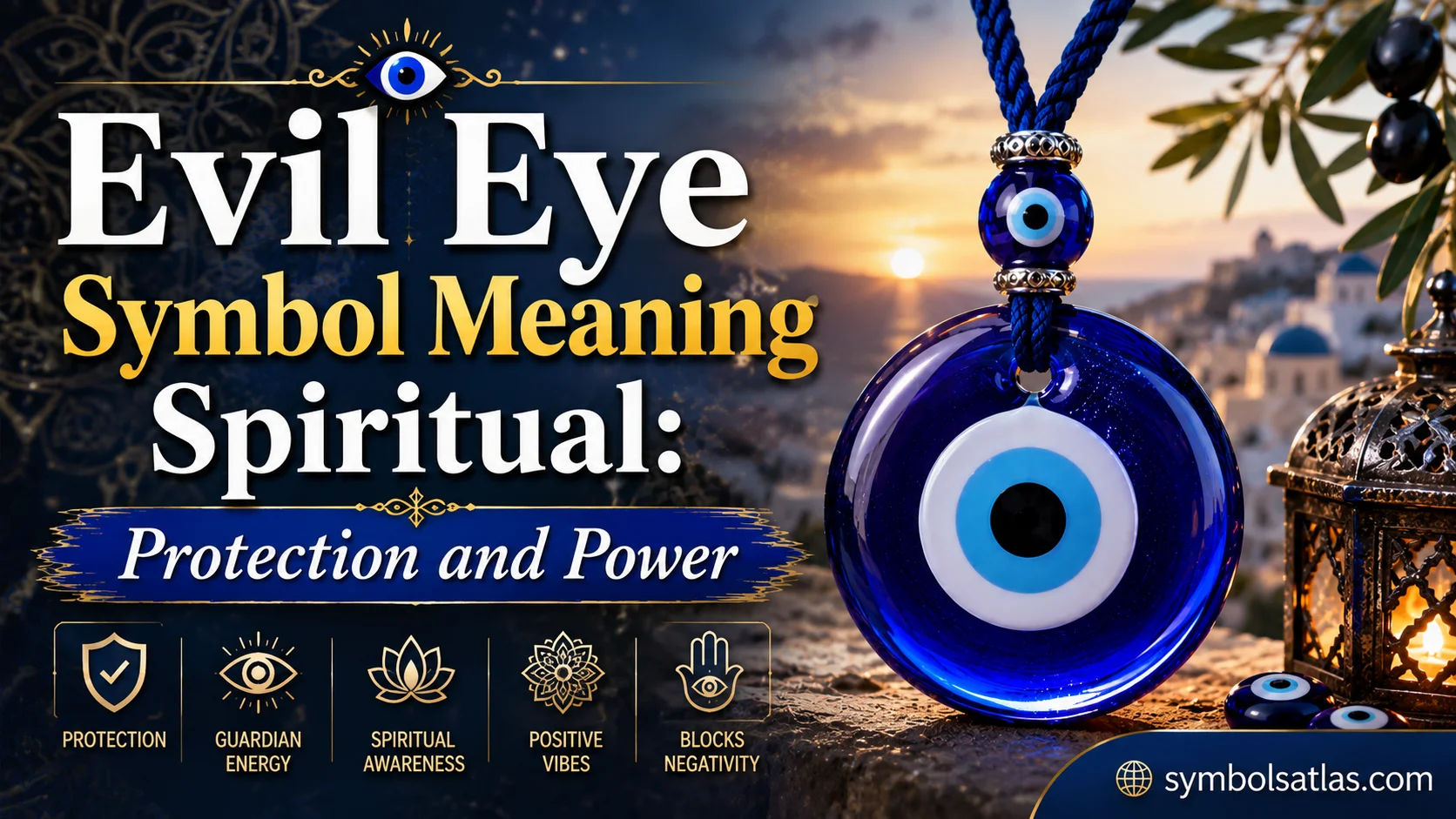

The Evil Eye Symbol Meaning Spiritual explores the belief that certain symbols can offer protection, awareness, and positive energy against negativity.
The evil eye symbol has been used for centuries as a sign of protection, often representing the desire to guard against jealousy, harmful intentions, and negative energy. Its meaning can vary across cultures and spiritual traditions, yet the central idea often remains connected to protection and awareness. Today, many people wear evil eye jewelry, display the symbol in their homes, or use it as a reminder to protect their peace and energy. Understanding the spiritual meaning of the evil eye can offer a deeper look at its history, symbolism, and modern significance.
The Evil Eye Symbol Meaning Spiritual can also be viewed as a reminder to stay mindful of the energy surrounding you. Rather than focusing only on superstition, many people see the symbol as a representation of inner strength, spiritual protection, and emotional balance. Its familiar blue-and-white design has become widely recognized, while its deeper meaning continues to inspire curiosity. Whether you encounter the evil eye in jewelry, artwork, home décor, or spiritual practices, exploring its symbolism can help explain why this ancient symbol remains meaningful in modern life.
Quick Answer
The Evil Eye Symbol Meaning Spiritual: Protection and Power is most commonly associated with protection from jealousy, negative energy, and harmful intentions. In the United States, it is often viewed as a spiritual safeguard and a symbol of positivity, while many cultures also connect it to luck, awareness, and personal strength.
TL;DR
• Symbolizes protection from negative energy and envy.
• Dates back thousands of years to ancient civilizations.
• Popular in American jewelry and home decor.
• Often associated with spiritual awareness and good fortune.
• Used across many cultures with similar protective meanings.
• Continues evolving through modern fashion and social media.
Overview of the Evil Eye Symbol
What Does the Evil Eye Look Like?
The Evil Eye usually appears as a stylized eye made of concentric circles. Blue is the most common color, though other variations exist.
Typical features include:
• Dark pupil at the center.
• Light blue and dark blue circles.
• Circular or teardrop shape.
• Glass, metal, or ceramic materials.
• Decorative and protective uses.
The eye design is simple yet powerful. Because it resembles a watchful eye, many people believe it symbolizes awareness and protection.
Core Meaning at a Glance
The Evil Eye generally represents:
• Protection from jealousy and envy.
• Defense against negative intentions.
• Spiritual awareness and vigilance.
• Good luck and positive energy.
• Personal strength during challenges.
These meanings have remained remarkably stable despite cultural differences.
Ancient Origins of the Evil Eye
Early Civilizations
The concept of the Evil Eye is older than many major religions. Historical evidence suggests that beliefs about harmful glances existed in ancient Mesopotamia, Egypt, Greece, and Rome.
People believed that envy could cause misfortune. A jealous look was thought to carry destructive power, especially toward success, beauty, wealth, or happiness.
As a result, protective symbols emerged to counteract these dangers.
Ancient Greece and Rome
Greek writers discussed the Evil Eye centuries before the Common Era. The belief spread throughout the Mediterranean and became part of everyday life.
Many ancient people used:
• Protective amulets.
• Special prayers.
• Symbolic eye imagery.
• Rituals against bad fortune.
• Decorative charms.
These practices helped shape the Evil Eye symbol recognized today.
Why People Feared the Evil Eye
The Power of Envy
Historically, envy was viewed as more than an emotion. Many cultures believed it could create real harm.
The fear centered on situations involving:
• Newborn children.
• Successful families.
• Wealth and prosperity.
• Physical beauty.
• Personal achievements.
Because envy was considered unavoidable, protective symbols became highly valued.
Social and Cultural Functions
Interestingly, Evil Eye beliefs also encouraged humility. People were often cautious about boasting or displaying excessive pride.
As a result, the tradition served both spiritual and social purposes.
Read More: Left Hand Burning Sensation Spiritual Meaning: Release
Spiritual Meaning of the Evil Eye Symbol
Protection and Energy
In modern spiritual circles, the Evil Eye is commonly seen as a protective shield.
Many believe it helps:
• Deflect negative energy.
• Promote emotional balance.
• Encourage inner peace.
• Strengthen spiritual boundaries.
• Support personal growth.
While interpretations vary, protection remains the dominant theme.
Awareness and Intuition
The eye itself symbolizes perception and awareness. Because eyes are associated with observation, the symbol often represents seeing beyond appearances.
For many people, it serves as a reminder to remain mindful and attentive.
Evil Eye Symbolism in the United States
Growing Popularity in America
The Evil Eye has become increasingly visible across the United States during the past two decades.
Americans often encounter it through:
• Jewelry collections.
• Home decorations.
• Yoga and wellness communities.
• Social media trends.
• Spiritual lifestyle brands.
Although many users appreciate its cultural origins, others simply connect with its protective symbolism.
American Interpretations
In the United States, the symbol is often understood in broader spiritual terms.
| Context | Meaning in the USA | Common Associations | Notes |
| Jewelry | Personal protection | Confidence, positivity | Popular everyday accessory |
| Home Decor | Protective atmosphere | Comfort, security | Often displayed near entrances |
| Spiritual Practice | Energy protection | Mindfulness, balance | Common in wellness circles |
| Gifts | Good wishes | Luck, friendship | Frequently given to loved ones |
| Social Media | Positive symbolism | Self-care, empowerment | Modern digital interpretation |
American usage tends to focus on positivity rather than fear.
Evil Eye Colors and Their Meanings
Traditional Blue Evil Eye
Blue remains the most recognizable color. It is often linked to calmness, safety, and protection.
Other Color Variations
Different traditions assign additional meanings to colors.
• Dark blue for strong protection.
• Light blue for peace and clarity.
• Green for growth and success.
• Red for courage and strength.
• White for purity and focus.
• Purple for wisdom and creativity.
However, meanings vary between cultures and communities.
Cross-Cultural and Religious Perspectives
Mediterranean Traditions
Countries around the Mediterranean have some of the strongest Evil Eye traditions.
These include:
• Greece.
• Turkey.
• Cyprus.
• Albania.
• Parts of Italy.
The symbol remains deeply connected to cultural heritage in these regions.
Middle Eastern Beliefs
Many Middle Eastern communities also recognize the Evil Eye concept. Protective practices may differ, but the underlying concern about harmful envy is similar.
Religious Views
The Evil Eye appears in discussions within several religious traditions, including Christianity, Islam, Judaism, and folk spiritual practices.
However, interpretations differ significantly. Some people view protective charms as meaningful symbols, while others focus solely on prayer or faith.
Emotional and Psychological Associations
Why the Symbol Feels Powerful
Psychologically, the Evil Eye resonates because it addresses common human concerns.
People naturally worry about:
• Criticism from others.
• Jealousy and competition.
• Personal vulnerability.
• Unexpected setbacks.
• Social pressure.
The symbol offers a sense of reassurance and control.
Identity and Self-Expression
Many individuals wear the Evil Eye not because of supernatural beliefs but because it reflects personal values such as resilience, awareness, and protection.
As a result, it often becomes part of personal identity.
Evil Eye in Tattoos and Fashion
Tattoo Symbolism
The Evil Eye is a popular tattoo choice across America.
Common meanings include:
• Protection during life changes.
• Recovery after hardship.
• Personal empowerment.
• Spiritual awareness.
• Strength against negativity.
Tattoo designs often combine the eye with flowers, geometric shapes, or celestial imagery.
Fashion Trends
The symbol appears on:
• Necklaces.
• Bracelets.
• Earrings.
• Clothing.
• Handbags.
Its blend of beauty and symbolism contributes to its lasting appeal.
Evil Eye in Home Decor and Everyday Life
Protective Placement
Many people place Evil Eye symbols near entryways, believing they help create a positive environment.
Popular locations include:
• Front doors.
• Living rooms.
• Workspaces.
• Vehicles.
• Personal altars.
Decorative Appeal
Even among those who do not hold spiritual beliefs, the design is appreciated for its visual beauty and cultural significance.
Misunderstandings and Controversies
Is the Evil Eye Evil?
One of the biggest misconceptions involves the name itself.
The symbol does not usually represent evil. Instead, it is traditionally intended to protect against harmful influences.
Cultural Appropriation Concerns
As the symbol grows in popularity, discussions about cultural appropriation sometimes arise.
Some concerns include:
• Ignoring cultural origins.
• Commercializing sacred traditions.
• Misrepresenting historical meanings.
• Using symbols without understanding context.
Many people encourage respectful appreciation and learning about the cultures connected to the symbol.
How the Meaning Has Changed Over Time
Ancient to Modern Evolution
The Evil Eye has undergone several transformations.
Historically, it was closely tied to fears of curses and supernatural harm. Today, many people interpret it more symbolically.
Modern meanings often emphasize:
• Positive energy.
• Emotional well-being.
• Self-protection.
• Personal empowerment.
• Cultural appreciation.
Revival Through Digital Culture
Social media has introduced the symbol to new audiences. Consequently, younger generations often view it as both fashionable and meaningful.
Its popularity continues to grow across diverse communities.
FAQs
Is the Evil Eye symbol good or bad?
The symbol is generally considered protective rather than harmful. Its traditional purpose is to guard against negativity and envy.
What does wearing an Evil Eye necklace mean?
Many people wear it as a reminder of protection, awareness, and positive energy. Others appreciate its cultural or aesthetic value.
Is the Evil Eye connected to a specific religion?
No single religion owns the symbol. It appears in various cultural and religious traditions, though interpretations differ.
Why is the Evil Eye usually blue?
Blue has long been associated with protection, calmness, and spiritual defense. This color became the most recognizable version over time.
Can someone wear the Evil Eye without spiritual beliefs?
Yes. Many people wear it simply as jewelry or as a symbol of strength and positivity.
Why has the Evil Eye become popular in America?
Its combination of cultural history, spiritual symbolism, and attractive design appeals to many Americans interested in wellness, fashion, and personal meaning.
Conclusion
The Evil Eye Symbol Meaning Spiritual: Protection and Power continues to resonate because it speaks to a universal human concern: the desire for safety, balance, and protection from negativity. From ancient civilizations to modern American culture, the symbol has maintained its reputation as a powerful guardian against envy and harmful intentions.
Today, the Evil Eye serves many purposes. For some, it is a spiritual tool. For others, it is a cultural tradition, a fashion statement, or a reminder to stay mindful and resilient. Whatever the perspective, its enduring popularity shows how ancient symbols can continue finding new meaning in modern life.