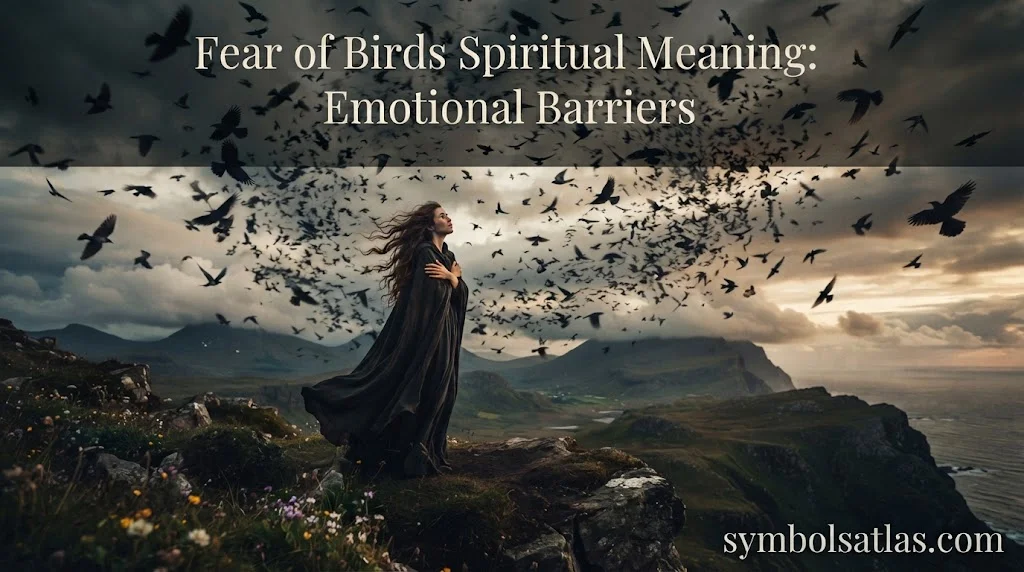

Fear of birds can feel deeper than an ordinary fear, especially when repeated encounters seem emotionally significant. The spiritual meaning of fear of birds may reflect hidden emotions, personal boundaries, or inner transformation.
In spiritual symbolism, birds are often associated with freedom, messages, intuition, and higher perspective. When someone experiences a strong fear of birds, it may symbolize discomfort with change, vulnerability, or something that feels difficult to control. This experience can invite deeper self-reflection rather than simply representing a negative sign. Different traditions may interpret the fear through ideas such as spiritual protection, emotional healing, or resistance to personal growth. Understanding the context, emotions, and circumstances surrounding the fear can provide a more meaningful interpretation.
The spiritual meaning of fear of birds can also vary depending on the type of bird, the situation, and the feelings experienced during the encounter. For some people, birds may represent freedom and inspiration, while fear may point toward a desire to stay safe, grounded, or protected. In spiritual symbolism, this contrast can highlight an inner conflict between wanting change and fearing the unknown. It may also encourage you to examine old beliefs, unresolved emotions, or personal boundaries. While spiritual interpretations can offer meaningful reflection, fear can also have psychological or practical causes, so it is important to consider both perspectives.
Quick Answer
Fear of birds spiritual meaning often symbolizes emotional barriers, fear of freedom, vulnerability, uncertainty, or difficulty accepting change. In the USA, birds commonly represent independence and possibility, so fearing them can symbolically reflect tension between wanting freedom and feeling unsafe with the unknown.
TL;DR
- Birds commonly symbolize freedom, perspective, movement, and spiritual awareness.
- Fear may represent an emotional barrier rather than a supernatural message.
- American culture often connects birds with independence and open possibilities.
- Ancient traditions frequently linked birds with messages, souls, and the heavens.
- The meaning changes according to personal experiences and cultural beliefs.
- Modern interpretations often focus on growth, vulnerability, and emotional freedom.
What Does Fear of Birds Symbolize?
Fear of birds can symbolize a conflict between freedom and emotional safety. Birds move quickly, enter unexpected spaces, and live in a world humans cannot fully control.
For a USA reader, this symbolism can feel especially relevant because independence is strongly valued. However, freedom can also feel overwhelming when it requires uncertainty or personal change.
Freedom That Feels Uncomfortable
Birds naturally represent movement and open space. Therefore, fear of them may symbolically suggest discomfort with unrestricted choices.
This doesn’t mean someone secretly wants to avoid freedom. Instead, it may represent the tension that sometimes appears when freedom brings responsibility.
Common Symbolic Meanings
• Fear of losing control over unexpected situations
• Difficulty trusting unfamiliar experiences
• Emotional resistance toward personal change
• Feeling exposed or vulnerable around others
• A desire for safety before taking risks
Historical Roots of Bird Symbolism
Bird symbolism is extremely old and appears across many societies. Long before modern psychology, people watched birds closely and noticed their unusual relationship with the sky.
Because birds could rise above the ground, they often became symbols of messages, souls, protection, and divine connection. Their ability to migrate also connected them with cycles and transformation.
Ancient Connections
In ancient Mediterranean traditions, birds sometimes appeared in religious art and stories connected with gods, omens, or the soul. In ancient Egypt, bird imagery was also connected with spiritual ideas and the movement between different states of existence.
Across many early cultures, however, bird symbolism was not always positive. Certain birds could represent death, danger, disorder, or mystery.
Why Fear Became Symbolic
The contrast between beautiful flight and sudden movement helped create powerful symbolism. A bird could look peaceful from a distance yet become startling when it flew close.
That contrast remains important today. Something associated with freedom can also represent unpredictability.
Bird Symbolism in the United States
American culture gives birds many meanings, from freedom and national identity to nature and personal independence. The bald eagle is perhaps the clearest example.
The eagle became a major American national symbol because of its association with strength, freedom, and independence. As a result, birds can carry unusually strong cultural meaning for American audiences.
Nature and Freedom
Birds are common in American parks, backyards, wildlife areas, and rural landscapes. People often associate them with peaceful mornings, open skies, springtime, and connection with nature.
At the same time, birds can represent something difficult to contain. Their ability to fly away can symbolize independence and personal choice.
A Symbolic Contrast
For someone afraid of birds, this creates an interesting contrast:
| Context | Meaning in the USA | Common Association | Symbolic Tension |
| Bird in the sky | Freedom | Independence | Freedom versus safety |
| Bird approaching | Unexpected change | Surprise | Control versus uncertainty |
| Bird trapped indoors | Loss of direction | Confusion | Freedom versus restriction |
| Bird flying away | Departure | New beginnings | Attachment versus release |
| Eagle imagery | Strength | American identity | Power versus vulnerability |
Spiritual Meaning of Fear and Freedom
Spiritually, fear can sometimes be interpreted as a sign that something feels unresolved. When birds represent freedom, fear of them may symbolize difficulty accepting a new level of independence.
This interpretation should remain personal rather than absolute. Spiritual symbolism works best as a reflective framework, not as proof that an outside force is sending a specific message.
Freedom and Resistance
A bird can symbolize the ability to leave, explore, and change direction. Therefore, fear may represent resistance to stepping outside familiar emotional territory.
You might ask yourself:
• What change currently feels difficult to accept?
• Where do I feel safest staying within familiar limits?
• Does independence feel exciting or threatening?
• What would emotional freedom look like for me?
The Meaning of the Open Sky
The open sky often represents possibility. Yet possibility can feel frightening when there are many unknown outcomes.
In this sense, the bird becomes a symbol of unpredictable freedom. The fear may represent hesitation rather than weakness.
Emotional Barriers and Vulnerability
One of the strongest symbolic interpretations involves emotional protection. Fear can create distance between you and something that feels unpredictable.
Birds may symbolize this because they can approach suddenly, move rapidly, and occupy personal space without warning.
Fear of Being Exposed
Birds are creatures of open spaces. Symbolically, they can represent being seen, noticed, or exposed.
If the image of a bird makes you uncomfortable, you might reflect on whether another part of life currently makes you feel emotionally exposed.
Protection Versus Openness
Emotional barriers aren’t always negative. Sometimes boundaries help people feel secure.
However, symbolism can encourage you to consider whether a protective habit is still useful or has become restrictive.
What Birds Represent in Dreams and Spiritual Reflection
Birds commonly appear in dreams, stories, artwork, and personal spiritual reflection. Their meaning can change dramatically depending on what the bird is doing.
A peaceful bird may feel completely different from a bird attacking, chasing, or flying toward someone.
Common Bird Actions
• Flying upward can suggest hope, growth, or emotional release.
• Flying away can represent separation, transition, or letting go.
• Approaching you can symbolize an unexpected emotional issue.
• Circling overhead can suggest reflection or repeated thoughts.
• Remaining trapped can represent restricted freedom or frustration.
Fear Changes the Interpretation
If the dreamer feels afraid, the emotional reaction becomes important. The bird itself may not represent danger.
Instead, the fear may reveal how the dreamer responds to uncertainty, attention, change, or loss of control.
Cross-Cultural and Spiritual Bird Meanings
Birds have meaningful roles in many cultures, but their interpretations are not identical. Some traditions connect birds with ancestors, messages, protection, wisdom, or spiritual movement.
Other traditions associate certain birds with death, conflict, or warnings. These differences show why bird symbolism should never be reduced to one universal rule.
A Broad Spiritual Pattern
Across different traditions, birds often share several symbolic themes:
• Connection between earthly life and the heavens
• Messages arriving from unexpected directions
• Transformation and movement between life stages
• Freedom from physical or emotional limitations
• Observation and awareness from a higher viewpoint
These themes are broad patterns, not statements about what every culture or religion believes.
Psychological Meaning of Fear of Birds
Symbolically, fear often represents the mind’s desire for safety. Birds can become powerful symbols because they move independently and unpredictably.
However, personal fear can have many causes. A symbolic interpretation should not replace professional understanding when fear significantly affects daily life.
Control and Uncertainty
Birds don’t follow human schedules. They can suddenly fly across a street, land nearby, or disappear from view.
Symbolically, this makes them useful representations of uncertainty. Fear may therefore reflect a broader discomfort with situations that cannot be controlled.
Personal Associations Matter
Your personal history matters more than a general symbolism list. A childhood memory, frightening encounter, family story, or cultural belief can shape how birds feel to you.
That is why two people can experience the same bird very differently.
Fear of Birds and Personal Transformation
Birds frequently symbolize transition because they move between places with ease. Their flight can represent leaving an old stage behind.
Consequently, fear of birds may symbolically appear during periods when change feels unavoidable.
Leaving the Familiar
A bird leaving a branch provides a simple image of transition. It remains still for a moment, then suddenly moves into open space.
That movement can mirror personal growth. You may understand that change is necessary while still feeling nervous about taking the next step.
Emotional Growth
The symbolic lesson isn’t necessarily to eliminate fear immediately. Instead, it can be about understanding what the fear protects.
Sometimes awareness creates more freedom than forcing yourself to feel differently.
Modern Uses in Tattoos, Art, and Social Media
Bird imagery remains popular in modern American culture. People use birds in tattoos, home decor, jewelry, photography, clothing, and online posts.
The same image can communicate completely different ideas depending on the design and context.
Tattoos
Bird tattoos often represent freedom, independence, remembrance, hope, or transformation. A person who chooses a bird despite fearing birds might even use the image as a symbol of confronting an emotional barrier.
Home Decor and Digital Culture
Bird imagery appears in nature-inspired interiors, artwork, wallpapers, and social media posts. Flying birds can create feelings of calmness, openness, and possibility.
However, a darker bird image can communicate mystery, grief, solitude, or uncertainty. Context changes the message.
Different Birds Can Change the Meaning
Not every bird carries the same symbolism. The species, behavior, color, and setting can influence interpretation.
For example, an eagle may suggest strength, while a dove commonly suggests peace. A crow may evoke mystery or intelligence, depending on cultural context.
Context Matters
The same bird can have different meanings in different situations. A bird outside a window may feel peaceful, while a bird unexpectedly entering a room may feel intrusive.
Therefore, symbolic interpretation should consider the complete scene rather than the animal alone.
Color and Appearance
White birds are often associated with peace or purity. Darker birds may be linked with mystery or transformation.
These associations are cultural patterns rather than fixed spiritual laws.
Misunderstandings and Controversies
One common misunderstanding is that every fear has a hidden spiritual message. That claim goes too far.
Fear can simply be fear. Symbolism can offer a meaningful way to reflect, but it doesn’t prove that a specific event has supernatural significance.
Avoiding Absolute Interpretations
It can be tempting to say that fear of birds always means a certain spiritual problem. However, human experiences are too varied for such a rule.
A more balanced approach asks what the symbol means to you.
Symbolism Versus Reality
Birds can represent freedom while still being ordinary wild animals. They can appear in spiritual art while remaining part of everyday nature.
Keeping both perspectives allows symbolism to remain thoughtful without turning every encounter into a prediction.
How the Meaning Has Changed Over Time
Bird symbolism has shifted considerably throughout history. Earlier societies sometimes treated birds as signs connected with gods, fate, ancestors, or unusual events.
Modern Americans are more likely to interpret bird imagery through personal identity, nature, freedom, emotional growth, or popular culture.
From Omens to Personal Symbols
Older traditions often placed greater emphasis on external signs. Today, many people use symbolism as a personal language for emotions and experiences.
This shift doesn’t erase older meanings. Instead, it adds new layers to them.
Modern Interpretation
Today, fear of birds may be understood symbolically as a conflict involving:
• Independence and the need for emotional security
• Curiosity and fear of unfamiliar experiences
• Personal boundaries and unexpected intrusion
• Desire for change and resistance to uncertainty
• Emotional protection and the need for openness
How to Reflect on the Symbolism Personally
If fear of birds feels symbolically important to you, reflection can help identify what the image represents. Start with your emotional reaction rather than searching for one fixed answer.
Ask yourself what happens inside you when you see or imagine a bird.
Questions for Reflection
• What is the first emotion I notice?
• Do I feel threatened, trapped, watched, or surprised?
• Does freedom currently feel exciting or uncomfortable?
• Am I resisting a change I already recognize?
• What emotional boundary might I be protecting?
These questions don’t provide a supernatural answer. Instead, they help turn symbolism into a tool for personal awareness.
FAQs
1. What is the spiritual meaning of fear of birds?
The spiritual meaning of fear of birds may relate to freedom, change, vulnerability, intuition, or emotional protection. Some spiritual traditions view birds as messengers, so fear may symbolize discomfort with a message, transformation, or unfamiliar experience.
2. Is fear of birds a spiritual sign?
Fear of birds can feel spiritually meaningful, but it does not necessarily mean you are receiving a supernatural sign. It may encourage self-reflection and help you understand emotions, boundaries, or experiences that make you feel unsafe or uncomfortable.
3. What does it mean spiritually when birds make me uncomfortable?
Feeling uncomfortable around birds may symbolize a struggle with freedom, unpredictability, or loss of control. The meaning depends on your personal experiences, the type of bird, and the emotions you experience during the encounter.
4. Do birds represent spiritual messages?
Across many cultures, birds have been associated with messages, freedom, wisdom, transition, and spiritual connection. However, interpretations differ between traditions, so a bird encounter does not have one universal spiritual meaning.
5. Can fear of birds represent spiritual growth?
Yes, some symbolic interpretations connect fear with personal growth and transformation. Facing what makes you uncomfortable may encourage greater self-awareness. Still, fear can also have psychological or practical causes and should not automatically be interpreted spiritually.
Conclusion
The spiritual meaning of fear of birds can represent several themes, including vulnerability, freedom, change, intuition, and the desire for protection. Rather than treating fear as a definite spiritual warning, consider what the experience brings up emotionally and what it may reveal about your current thoughts or circumstances.
Bird symbolism is deeply personal and varies across cultures and beliefs. If birds trigger fear or anxiety, there is no need to force a spiritual interpretation. Self-awareness, compassion, and understanding can help you explore the experience while keeping both spiritual symbolism and everyday explanations in perspective.