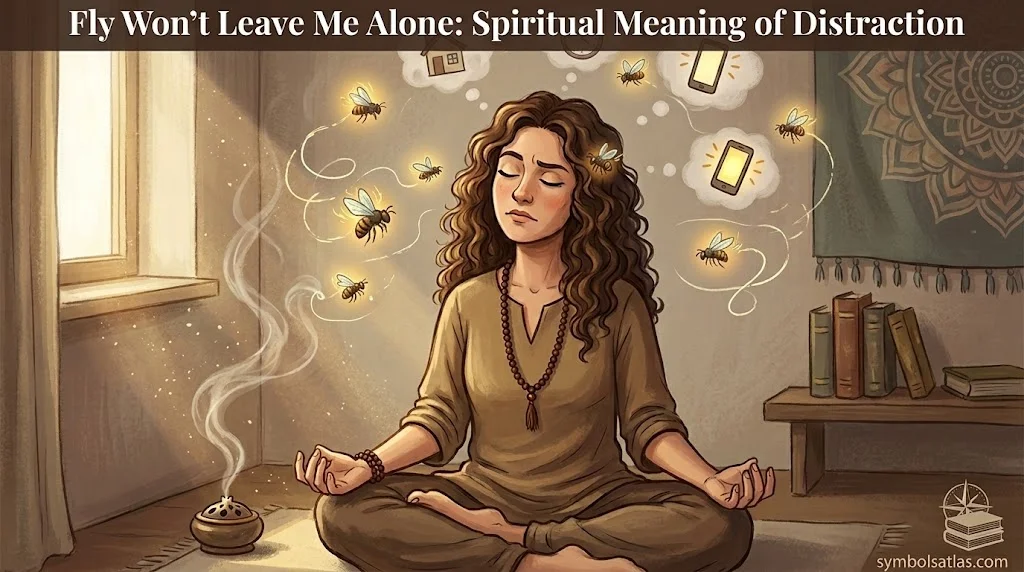

Have you ever wondered why a fly won’t leave you alone, no matter how often you wave it away? This common experience can feel annoying, mysterious, or surprisingly meaningful.
When a fly keeps following you, buzzing around your face, landing on your skin, or returning after you shoo it away, it is natural to wonder why. In everyday life, flies are usually attracted to body heat, sweat, moisture, scents, and tiny food particles. However, some people also explore the spiritual meaning of a fly that repeatedly appears around them. Depending on personal beliefs, this encounter may symbolize persistence, awareness, irritation, or transformation. Understanding both the practical reasons and symbolic interpretations can help you make sense of this unusual experience without jumping to conclusions.
The experience of a fly that won’t leave you alone can have several explanations, ranging from ordinary insect behavior to personal symbolism. Flies may be attracted to the natural odors produced by your body, particularly after exercise or during warm weather. They can also seek moisture around your eyes, nose, and mouth. From a spiritual perspective, some people interpret repeated encounters with flies as reminders to pay attention to neglected matters, release unwanted habits, or become more aware of their surroundings. These interpretations vary across cultures and personal belief systems, and there is no scientific evidence that a fly’s behavior carries a supernatural message. By considering both natural causes and spiritual symbolism, you can explore what this encounter means to you while staying grounded in reality.
Quick Answer
The spiritual meaning of a fly that won’t leave you alone often symbolizes distraction, persistence, unresolved concerns, or the need to establish personal boundaries. In American everyday life, it may serve as a personal reminder to refocus, clear away unnecessary distractions, and pay attention to neglected responsibilities. Broader spiritual interpretations may connect flies with transformation, awareness, and endurance, but these meanings are symbolic rather than proven supernatural messages.
TL;DR
- A persistent fly can symbolize distraction and the need to regain focus.
- Repeated encounters may inspire reflection on unresolved problems or neglected responsibilities.
- Spiritually, flies can represent persistence, adaptability, and transformation.
- Emotionally, the experience may highlight irritation, stress, or a desire for personal space.
- In American culture, flies commonly represent everyday annoyances and cleanliness concerns.
- A fly’s presence doesn’t automatically indicate bad luck, negative energy, or a spiritual warning.
What Does It Mean When a Fly Won’t Leave You Alone?
When a fly repeatedly approaches you, its behavior can become a symbol of something that keeps demanding your attention. This interpretation is especially relatable when you’re dealing with distractions, unfinished tasks, or situations that seem impossible to ignore. However, a fly’s behavior usually has ordinary environmental explanations.
A Symbol of Distraction
The most common symbolic interpretation is distraction. A fly may interrupt your concentration, disturb a quiet moment, or repeatedly draw your eyes away from an important task.
Symbolically, this experience can remind you to consider where your attention goes throughout the day. Are you spending too much time worrying about something beyond your control? Are small frustrations preventing you from focusing on what truly matters?
The fly becomes a useful metaphor for anything that repeatedly interrupts your peace.
A Reminder to Pay Attention
Sometimes, people interpret a persistent fly as a reminder to notice something they’ve been avoiding. This could involve a difficult conversation, an unfinished responsibility, or an emotional concern that keeps returning.
However, this doesn’t mean the insect has identified a hidden truth about your life. Instead, you can use the encounter as a prompt to reflect on your current priorities and decide whether anything needs attention.
A Lesson in Persistence
Flies are remarkably persistent. They may return moments after being shooed away, making them natural symbols of endurance and repeated effort.
From a spiritual perspective, this behavior can encourage you to remain committed to a meaningful goal. Alternatively, it may invite you to ask whether you’re repeating a pattern that no longer serves you.
The important distinction is between healthy persistence and refusing to let go of something that causes unnecessary stress.
Spiritual Meaning of a Fly That Keeps Following You
A fly that seems to follow you from one place to another can feel more significant than an ordinary encounter. In spiritual reflection, people sometimes connect this experience with awareness, recurring thoughts, or the need to examine their surroundings. Still, the fly may simply be attracted to food, moisture, warmth, or natural body odors.
Awareness and Mindfulness
A recurring fly can remind you to become more aware of the present moment. Instead of reacting immediately with frustration, notice your feelings and the situation around you.
For example, if you’re already overwhelmed, a small interruption may feel much larger than it normally would. Recognizing that response can help you understand your emotional state more clearly.
Repeated Thoughts and Unfinished Business
Some spiritual interpretations associate recurring encounters with thoughts or concerns that keep returning. The fly can serve as a metaphor for a problem you’ve postponed or a habit you’ve struggled to change.
Consider these possible reflections:
- An unfinished task may need a realistic deadline.
- A recurring worry may deserve calm, practical attention.
- A difficult relationship may require clearer communication.
- An exhausting routine may need adjustment or a break.
These are reflective possibilities, not fixed meanings attached to the insect.
Protecting Your Inner Peace
If the fly repeatedly interrupts your rest, its symbolic message may be about protecting your attention and emotional space. You don’t need to treat every disturbance as meaningful or respond to every demand immediately.
Instead, decide which concerns deserve your energy. Sometimes, the most helpful lesson is simply learning to return your attention to what matters.
Historical Background of Flies in Spiritual Symbolism
Flies have appeared in human culture for thousands of years. Their meanings have varied widely, reflecting their connection with food, decay, disease, survival, and the natural cycle of life.
Ancient Egyptian Associations
In ancient Egypt, the fly had an important connection with courage and military achievement. Fly-shaped pendants were sometimes awarded as honors to soldiers, particularly during the New Kingdom period.
This association is interesting because modern people often view flies negatively. In the Egyptian context, the insect’s persistence could be understood as a fitting symbol of determination and bravery.
The historical lesson is that symbols don’t have one universal meaning. An insect viewed as a nuisance in one setting can represent admirable qualities in another.
Flies in Ancient Mediterranean Cultures
In parts of the ancient Mediterranean world, flies were connected with decay, disease, and harmful conditions. Their presence around waste and spoiled food made them familiar symbols of contamination and unpleasant surroundings.
The ancient Greek epithet Myiagros, associated with Zeus in some traditions, referred to a fly-driving or fly-chasing role. Such traditions reflect practical concerns about insects as well as religious interpretations of protection.
However, these historical associations don’t establish a universal spiritual message for modern encounters.
Biblical and Christian Associations
In the Bible, flies appear in several contexts, including the plagues of Egypt and imagery associated with decay or corruption. The name Beelzebul is also linked historically with a term often interpreted as “lord of the flies,” although the title’s linguistic origins and development are debated.
Because of these associations, some Christian interpretations connect flies with impurity, temptation, or spiritual disorder. Other readers approach such passages as historical narratives or literary images rather than instructions for interpreting everyday insect encounters.
A fly landing on you today should not automatically be treated as a sign of sin, danger, or divine judgment.
Fly Symbolism in American Culture
In the United States, flies generally carry practical and cultural meanings shaped by daily life. They appear in conversations about cleanliness, summer weather, agriculture, outdoor gatherings, and household maintenance. These associations often influence how Americans interpret a fly that repeatedly approaches them.
Everyday Annoyance and Lost Focus
A fly buzzing around your face can interrupt work, reading, cooking, or relaxation. Because the experience is so familiar, it offers an easy metaphor for unwanted distractions.
For example, someone might describe constant notifications, interruptions, or unnecessary drama as “flies” that keep returning. The image captures the feeling of being bothered by something small that refuses to disappear.
Summer, Outdoor Life, and Rural Traditions
In many American communities, flies are part of summer picnics, camping trips, gardens, farms, and outdoor activities. Their presence often reminds people of heat, open spaces, livestock, and the practical challenges of living close to nature.
Consequently, the insect’s meaning may depend on the setting. A fly near a picnic table might simply be a nuisance, while a fly encountered during a quiet moment outdoors may inspire personal reflection.
Popular Culture and Humor
American entertainment frequently uses flies to suggest something irritating, unpleasant, or difficult to control. Cartoon characters swatting at flies and comedy scenes involving buzzing insects reinforce this familiar association.
At the same time, the fly’s persistence can become a humorous symbol of determination. It may represent a stubborn problem, an annoying coworker in a fictional story, or a distraction that keeps returning at the worst possible moment.
Read More: Grey Tabby Cat Spiritual Meaning: Spiritual Guidance
What Does a Fly Symbolize in Different Spiritual Traditions?
Flies don’t carry the same meaning across every culture or spiritual tradition. Their symbolism often reflects local environments, religious stories, and the qualities people observe in nature.
Negative Symbolism: Decay and Disturbance
In some religious and folk interpretations, flies represent decay, impurity, or unwanted influences. Their attraction to decomposing material has made them powerful images of disorder and things people would rather avoid.
From this perspective, a persistent fly may inspire reflection about unhealthy habits, neglected responsibilities, or environments that need attention. However, such interpretations are cultural beliefs rather than proof that a person is surrounded by negative energy.
Positive Symbolism: Persistence and Survival
Other interpretations focus on the fly’s ability to survive and adapt. Despite its small size, it can navigate challenging environments and continue moving after repeated interruptions.
This quality can symbolize resilience, flexibility, and the determination to keep going. The same behavior that makes a fly irritating can also illustrate persistence.
Personal Spiritual Interpretation
If you’re exploring the encounter spiritually, consider the meaning that best fits your circumstances without assuming the fly was sent to deliver a message.
You might ask yourself:
- What has been repeatedly interrupting my peace?
- Where do I need more patience or flexibility?
- Am I ignoring something that deserves practical attention?
- What can I release instead of repeatedly fighting it?
These questions keep the experience meaningful without turning ordinary behavior into a frightening prediction.
Psychological Meaning of a Fly That Won’t Leave You Alone
A persistent fly can influence your mood because it repeatedly interrupts your attention. The psychological meaning of the experience often comes from how you respond, rather than from the insect itself.
Irritation and Mental Overload
When you’re tired, anxious, or busy, small disturbances may become harder to tolerate. A buzzing fly can feel unusually frustrating because it interrupts concentration without offering an easy solution.
Symbolically, this experience may reflect a broader feeling of mental overload. You might be dealing with too many demands, constant interruptions, or concerns that seem minor individually but exhausting together.
The Need for Boundaries
A fly that repeatedly enters your personal space can become a metaphor for boundaries. It may remind you of situations where you feel unable to concentrate, rest, or enjoy time alone.
Consider whether you need to reduce interruptions, communicate your limits, or make more room for rest. You don’t have to interpret the fly as a supernatural warning to benefit from the reflection.
Attention and the Mind’s Search for Patterns
People naturally notice events that feel unusual or emotionally important. When a fly keeps returning, you may begin paying closer attention to each appearance.
This process can make the experience feel increasingly significant. However, noticing a pattern doesn’t necessarily mean it has a hidden cause or spiritual purpose.
A balanced interpretation acknowledges both possibilities: the fly has a natural explanation, and your reaction can still reveal something about your current thoughts or feelings.
Is a Fly in Your House a Spiritual Sign?
A fly inside your home may prompt spiritual reflection, especially if it appears during a quiet or emotionally important moment. Nevertheless, indoor flies commonly enter through open doors, windows, damaged screens, or other small openings.
Symbolic Meaning of a Fly Indoors
In a symbolic reading, a fly inside the home may represent disruption, neglected details, or the desire to restore order. Because a home often represents comfort and personal space, an unwanted insect can highlight the importance of maintaining that environment.
Possible personal interpretations include:
- Restoring calm after a stressful period.
- Addressing small household problems before they grow.
- Creating healthier routines and clearer boundaries.
- Paying attention to concerns you’ve repeatedly postponed.
These meanings are optional reflections, not evidence of an unseen presence.
Practical Reasons to Check Your Home
Before assigning spiritual significance to a fly, consider ordinary causes. Food scraps, uncovered drinks, overflowing trash, pet waste, and damp areas can attract insects.
If several flies appear repeatedly, inspect screens, drains, trash containers, and nearby organic material. Addressing these causes is more useful than assuming the insects indicate bad luck or harmful energy.
Why Does a Fly Keep Landing on Me?
A fly repeatedly landing on your skin may seem personal, but flies use their senses to explore their surroundings. They can be attracted to moisture, salt from sweat, body odors, warmth, and other environmental cues.
Physical Explanations
Flies sometimes land on people because their skin provides moisture or accessible substances. They may also investigate clothing, food residue, or nearby scents.
If one fly keeps returning, it may be responding to the same conditions each time. Moving to another room, washing exposed skin, or removing nearby attractants may help.
Symbolic Meaning of Repeated Contact
Spiritually, repeated contact may be interpreted as a reminder to notice your physical and emotional needs. For example, the experience might encourage you to slow down, rest, or become more aware of your surroundings.
However, there is no reliable rule connecting a fly landing on your skin with a particular spiritual message. The meaning remains personal rather than universal.
Common Interpretations of Persistent Fly Encounters
The context of an encounter can shape its personal meaning. The following table compares common symbolic interpretations with practical considerations, helping you reflect without confusing symbolism with fact.
| Encounter | Possible Symbolic Meaning | Practical Consideration |
| A fly circles your head | Distraction or recurring thoughts | Check for nearby attractants and refocus |
| A fly lands on your skin | Awareness of personal needs | Consider sweat, moisture, or scents |
| A fly follows you indoors | A recurring concern or interruption | Inspect food, waste, and entry points |
| Several flies appear together | Overlooked details or disorder | Check sanitation and possible breeding sources |
| A fly appears during meditation | An invitation to practice patience | Return attention gently to your breathing |
| A fly keeps returning after you shoo it | Persistence or an unresolved issue | Consider both natural causes and personal priorities |
These interpretations aren’t predictions. Use them as prompts for reflection, while allowing practical explanations to guide your response to the insect.
Modern Meanings of Flies in Tattoos, Art, and Social Media
Although flies aren’t as common in American tattoo designs as butterflies or birds, they appear in contemporary art, fashion, and alternative aesthetics. Their unusual appearance gives them several possible meanings, ranging from decay and discomfort to survival and transformation.
Fly Tattoos and Personal Identity
A fly tattoo may communicate different ideas depending on its design. A realistic fly can suggest mortality, uncomfortable truths, or an interest in overlooked parts of nature.
In contrast, an artistic or abstract fly may represent endurance, adaptability, or resistance to social expectations. The meaning depends on the wearer rather than a fixed symbolic code.
Social Media and Everyday Metaphors
Online, flies can represent annoying interruptions, persistent thoughts, unwanted attention, or situations that refuse to disappear. People may also use fly imagery humorously to describe an irritating day.
These meanings fit modern digital life, where notifications and constant demands can feel as persistent as a buzzing insect. The fly becomes a simple visual metaphor for distractions competing for attention.
Art, Decor, and Alternative Aesthetics
Fly illustrations may appear in nature-themed prints, gothic artwork, scientific displays, or designs that explore decay and the beauty of overlooked creatures. Some artists use them to challenge the idea that only attractive animals deserve attention.
As a result, the fly can express discomfort and fascination at the same time. Its meaning shifts according to the artwork, setting, and viewer.
Negative Spiritual Meanings and Common Misunderstandings
Because flies are associated with waste and decay, some people interpret repeated encounters as warnings about negative energy, bad luck, or spiritual danger. These beliefs exist in various forms, but they shouldn’t be treated as universal rules.
Does a Persistent Fly Mean Bad Luck?
No established evidence shows that a fly repeatedly approaching someone predicts misfortune. While certain traditions connect flies with unpleasant conditions, other interpretations emphasize resilience and persistence.
A single insect is not a reliable basis for predicting future events. It’s reasonable to remove the fly and continue with your day without fear.
Does a Fly Mean Someone Is Sending Negative Energy?
A persistent fly cannot establish that another person is jealous, hostile, or spiritually attacking you. Such conclusions may increase anxiety without providing useful information.
Instead, focus on observable behavior in your relationships. If someone repeatedly crosses your boundaries, address the actual conduct rather than relying on an insect as evidence.
Respecting Religious and Cultural Differences
Religious traditions interpret insects through different stories, histories, and teachings. It’s important not to treat one tradition’s negative symbolism as the universal meaning of flies.
Similarly, personal spirituality can offer comfort without requiring certainty about supernatural causes. A balanced approach respects cultural beliefs while distinguishing them from established facts.
How to Respond When a Fly Won’t Leave You Alone
You can respond to a persistent fly in a practical way while still using the experience for personal reflection. The goal is to reduce the disturbance, understand your reaction, and avoid creating unnecessary fear.
Take Practical Action First
Start by addressing the insect’s likely causes. Close doors or windows when possible, repair damaged screens, remove exposed food, and clean areas that may attract flies.
If many flies keep appearing, look for a nearby source rather than assuming each appearance has a separate meaning. Persistent infestations may require more thorough cleaning or professional pest control.
Use the Experience for Reflection
Once you’ve handled the practical problem, consider whether the interruption mirrors anything happening in your life. You might be struggling with constant demands, an unresolved task, or difficulty protecting your time.
A few helpful steps include:
- Pause and identify what is currently distracting you.
- Separate genuine responsibilities from unnecessary worries.
- Set one manageable priority for the next hour.
- Practice patience when small problems interrupt your plans.
- Let go of interpretations that increase fear without helping you.
Return to the Present Moment
If the encounter happened while you were praying, meditating, reading, or resting, you can simply return to that activity. There’s no need to search endlessly for a hidden message.
The experience can remind you that interruptions are part of ordinary life. What matters most is how calmly and thoughtfully you respond.
FAQs
What Is the Spiritual Meaning of a Fly That Won’t Leave You Alone?
A persistent fly is commonly interpreted as a symbol of distraction, endurance, or unresolved concerns. Its meaning depends on your beliefs and circumstances, and it doesn’t prove that a supernatural message is present.
Is a Fly Following Me a Sign From the Universe?
Some people interpret repeated encounters as reminders to pay attention to their lives. However, there is no reliable evidence that a fly following you is a message from the universe; natural attraction to scents, moisture, and environmental conditions offers ordinary explanations.
Does a Fly in My House Mean Negative Energy?
Not necessarily. Some spiritual traditions associate flies with disorder or decay, but an indoor fly usually enters through an opening or finds something that attracts it. Cleaning the area and checking possible entry points are sensible first steps.
Why Does a Fly Keep Landing on Me Spiritually?
Symbolically, repeated landings may encourage awareness of your needs, personal space, or emotional reactions. Physically, flies can be attracted to sweat, moisture, body odors, and substances on your skin, so the behavior doesn’t automatically carry spiritual significance.
Is a Fly a Symbol of Good Luck or Bad Luck?
Fly symbolism varies across cultures and historical periods. Some traditions connect flies with decay or impurity, while ancient Egyptian military symbolism associated fly-shaped honors with courage and persistence. Neither interpretation makes a fly a reliable predictor of luck.
What Should I Do if a Fly Appears During Meditation?
Remove the immediate distraction if necessary, then gently return your attention to your breathing or chosen focus. You can use the moment to practice patience without assuming the fly has interrupted you for a supernatural reason.
Conclusion
The Fly Won’t Leave Me Alone Spiritual Meaning often centers on distraction, persistence, awareness, and the importance of protecting your peace. Across history, flies have represented both unpleasant conditions and admirable endurance, showing how much symbolism depends on culture and context. In modern American life, the fly is usually an everyday nuisance, but it can also serve as a personal reminder to examine your attention, habits, and emotional boundaries.
If a fly keeps returning, consider the practical explanation first and reflect on the experience only if it feels useful. You don’t need to fear the encounter or assign it a fixed spiritual meaning. Instead, let it remind you to address distractions, care for your surroundings, and return your energy to the things that matter most.