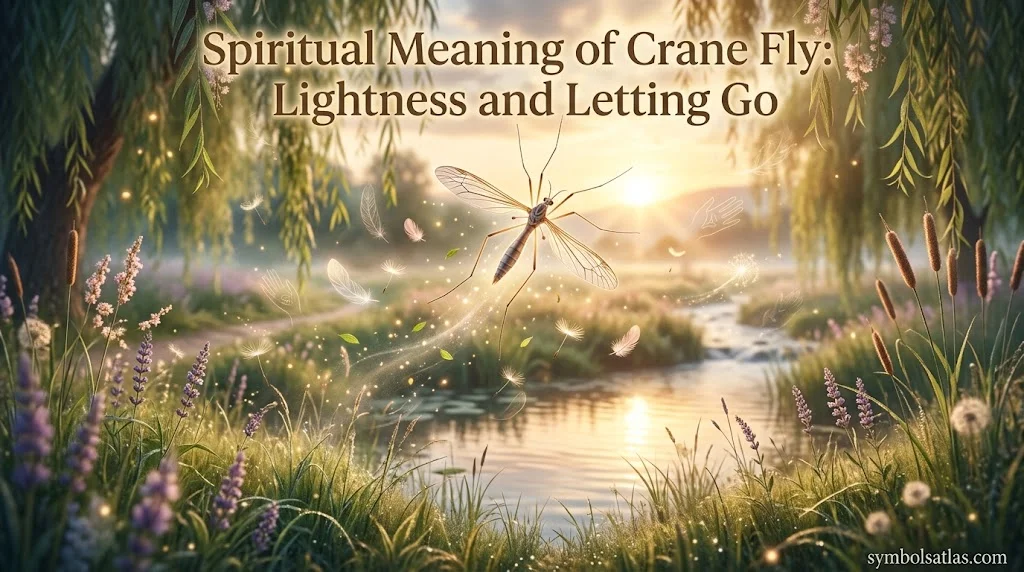

The spiritual meaning of a crane fly is often associated with patience, transformation, lightness, and personal growth. This delicate insect can inspire you to embrace life’s changes.
In spiritual symbolism, the crane fly can represent patience, adaptability, and the importance of letting go. Although its long legs and fragile wings may make it appear vulnerable, this insect continues to move through the world in its own way. Seeing a crane fly may encourage you to slow down, trust your journey, and recognize the value of small experiences. Its presence can also symbolize new beginnings, reminding you that personal growth often happens gradually. Rather than rushing toward your goals, you can learn to appreciate the process and remain open to unexpected opportunities.
The spiritual symbolism of crane flies can also relate to emotional balance, inner peace, and spiritual awareness. Their gentle movements may remind you to approach difficult situations with patience instead of fear or frustration. If you frequently notice crane flies around your home or garden, you might use the experience as an opportunity for self-reflection rather than assuming it predicts a specific event. In some personal interpretations, a crane fly represents the need to release unnecessary worries, maintain healthy boundaries, and trust yourself during uncertain times. Understanding these symbolic associations can help you explore what this unusual insect means within your own spiritual journey.
Quick Answer
The spiritual meaning of crane fly often represents lightness, releasing emotional burdens, and moving through life’s changes with patience. In the United States, its fragile appearance and gentle presence can inspire reflection on simplicity, adaptability, and personal freedom. These interpretations are symbolic rather than proven supernatural messages.
TL;DR
- Lightness: Let go of unnecessary worries and emotional weight.
- Letting go: Make room for new experiences and personal growth.
- Patience: Accept that progress can happen slowly.
- Adaptability: Learn to navigate uncertainty without demanding perfection.
- Gentleness: Treat yourself and others with greater compassion.
- Awareness: Use unexpected encounters as opportunities for mindful reflection.
Understanding the Crane Fly as a Spiritual Symbol
Crane flies are often mistaken for oversized mosquitoes because of their long legs and slender bodies. However, most adult crane flies don’t bite people or feed on blood. Their harmless nature can make them a useful symbol of gentleness and the importance of looking beyond appearances.
What Makes the Crane Fly Symbolic?
A crane fly’s delicate body and unusually long legs create a striking contrast. It looks fragile, yet it continues moving through the world despite its awkward flight.
This contrast can inspire several personal interpretations:
- Fragility: Recognize that vulnerability doesn’t eliminate your value.
- Movement: Continue forward even when your path feels uncertain.
- Simplicity: Appreciate ordinary moments without demanding dramatic experiences.
- Gentleness: Approach challenges without creating unnecessary conflict.
These meanings come from reflective interpretation rather than a single established religious teaching. Therefore, you can explore them without assuming every crane fly encounter carries a hidden message.
The Difference Between Crane Flies and Mosquitoes
Understanding the actual insect helps separate natural behavior from spiritual symbolism. Crane flies belong to the insect family Tipulidae and are commonly recognized by their long legs and delicate wings.
Unlike mosquitoes, adult crane flies generally don’t bite people. Their larvae often live in soil, leaf litter, or aquatic environments, depending on the species.
This distinction adds an interesting symbolic lesson: something that looks frightening or unfamiliar may be harmless. When a crane fly appears, you might reflect on whether a situation in your life deserves less fear than you’ve given it.
Read More: Spiritual Meaning of a Dead Snake: Endings and Renewal
Spiritual Meaning of Crane Fly: Lightness and Letting Go
The central symbolic themes associated with crane flies are lightness and release. Their delicate appearance can encourage you to consider what you’re carrying emotionally and whether it still serves you.
Lightness as a Way of Living
Lightness doesn’t mean ignoring responsibilities or pretending problems don’t exist. Instead, it means approaching life without adding unnecessary guilt, pressure, or fear.
For example, you might interpret a crane fly landing nearby as a reminder to take a break from constant overthinking. Its presence can prompt you to reconsider whether you’re making a difficult situation heavier than necessary.
A lighter approach may involve:
- Releasing unrealistic expectations of yourself.
- Allowing mistakes to become opportunities for learning.
- Making room for humor during stressful moments.
- Choosing peace instead of unnecessary arguments.
These small changes can help you respond to everyday challenges with greater flexibility.
Letting Go Without Losing Yourself
Letting go is another common symbolic interpretation. Sometimes, people hold onto old disappointments, outdated expectations, or relationships that no longer fit their lives.
The crane fly can serve as a personal reminder that moving forward doesn’t require erasing the past. Instead, you can acknowledge what happened, learn from it, and gradually release its hold on your present.
However, letting go doesn’t mean tolerating harmful behavior or abandoning important responsibilities. It means recognizing what you can change and what you must allow to remain outside your control.
Historical Background and Ancient Symbolism
Crane flies don’t have one widely documented ancient symbolic tradition comparable to that of butterflies, bees, or scarab beetles. Their modern spiritual meanings are better understood through broader ideas about insects, fragility, and transformation.
Insects in Ancient Belief Systems
Many ancient societies observed insects closely because they played important roles in farming, seasonal change, food systems, and the natural world. Some insects became powerful religious symbols, while others were associated with renewal, decay, or protection.
For instance, ancient Egyptian art gave the scarab beetle an important connection with renewal and rebirth. Other cultures developed stories around butterflies, cicadas, and bees.
However, these traditions shouldn’t automatically be applied to crane flies. There is no strong historical basis for claiming that ancient Egyptians or other early civilizations assigned the modern crane fly specific meanings such as emotional release or spiritual freedom.
How Modern Interpretations Developed
Today, many people explore animal and insect symbolism through nature-based spirituality, personal reflection, folklore, and popular spiritual writing. These approaches often connect an animal’s physical characteristics with a human experience.
Because crane flies appear delicate and move unpredictably, modern interpretations may associate them with vulnerability, adaptability, and letting go. These ideas are meaningful as personal symbolism, even when they aren’t supported by an ancient tradition.
The important distinction is between documented history and contemporary interpretation. Knowing the difference allows you to appreciate symbolic meanings without treating recent ideas as established historical facts.
Crane Fly Symbolism in the United States
In the United States, crane flies are familiar sights in yards, gardens, garages, and around outdoor lights. Their presence often connects with seasonal changes, everyday encounters with wildlife, and the simple experience of noticing nature.
Everyday Encounters and American Culture
Many Americans first notice crane flies when the insects gather around a porch light or flutter against a window. Their sudden appearance can be surprising, especially when several appear together.
Unlike the bald eagle or butterfly, the crane fly isn’t a major national emblem in American culture. Its symbolism is generally personal rather than tied to official traditions, national holidays, or widely recognized historical events.
Still, ordinary encounters can encourage reflection. A crane fly hovering near your door might remind you to welcome change, while one appearing during a quiet evening might inspire you to slow down.
Common Interpretations in an American Context
The following table describes possible personal interpretations rather than universally accepted American beliefs.
| Context | Possible Symbolic Meaning | Personal Reflection |
| Crane fly near a window | Awareness and new perspectives | What might I be overlooking? |
| Crane fly inside the home | Boundaries and personal space | What needs attention in my daily life? |
| Crane fly in a garden | Connection with nature | How can I become more present? |
| Crane fly during a stressful period | Lightness and release | Which worries can I stop carrying? |
| Crane fly at an open doorway | Transition and possibility | Am I ready to welcome change? |
These interpretations can make an ordinary encounter feel meaningful without requiring a supernatural explanation. In the American context, they fit naturally with personal reflection, mindfulness, and an appreciation of everyday nature.
Crane Fly Spiritual Meaning Across Cultures
The spiritual interpretation of crane flies varies because different cultures understand insects through their own environments, histories, and beliefs. It’s important not to present one modern interpretation as a universal teaching shared by all spiritual traditions.
Nature-Based Spirituality
In some forms of contemporary nature-based spirituality, insects can serve as reminders of interconnectedness, seasonal rhythms, and the value of small living things. A crane fly’s presence may encourage someone to observe nature with greater care.
Its fragile appearance can also suggest humility. Rather than assuming that every meaningful experience must be dramatic, you might find value in something as ordinary as an insect resting on a wall.
However, these interpretations depend on the individual or spiritual practice. There isn’t one shared doctrine assigning the crane fly a fixed spiritual purpose.
Broader Cultural Connections
Across different societies, insects have represented many ideas, including renewal, persistence, good fortune, and the temporary nature of life. Those meanings depend on the particular species and tradition.
Some people may connect crane flies with freedom because of their wings. Others may associate them with patience because of their slow, uneven movements.
These are reasonable personal associations, but they shouldn’t be attributed to a specific Indigenous nation, religious community, or cultural tradition without reliable evidence. Respectful symbolism leaves room for differences rather than claiming that everyone understands an insect in the same way.
The Emotional and Psychological Meaning of Crane Flies
An unexpected encounter with a crane fly can bring up curiosity, discomfort, amusement, or calm. These reactions often reveal as much about your current emotional state as they do about the insect itself.
Fragility and Emotional Resilience
Crane flies look delicate, and their flight can seem clumsy. Yet they are living organisms adapted to their own environments, not simply symbols of weakness.
You might connect this contrast with your own experiences. Feeling uncertain or vulnerable doesn’t mean you’re incapable of handling difficult situations.
For example, someone starting a new job may feel unprepared while still learning useful skills. A crane fly could become a personal reminder that confidence doesn’t always come before action.
Why Small Encounters Can Feel Meaningful
People naturally look for patterns and meaning, especially during uncertain or emotional periods. An unusual encounter may become memorable because it happens when someone is already thinking about a major life decision.
That doesn’t mean the insect predicted an event or delivered an objective message. Instead, the encounter may provide a useful starting point for examining thoughts and feelings that were already present.
Consider these questions when a crane fly catches your attention:
- What was I thinking about before I noticed it?
- Am I carrying stress that I can reasonably reduce?
- Have I been resisting a change I need to consider?
- Would a gentler response help me handle my current situation?
Your answers can turn a brief moment into practical self-reflection.
What Does It Mean When a Crane Fly Visits Your Home?
A crane fly inside your home may feel significant, especially if it appears unexpectedly in a bedroom, kitchen, or living room. Spiritually, you might interpret the encounter through themes of awareness, boundaries, or the need for a calmer environment.
Crane Fly in the House
Symbolically, a crane fly entering your home can represent the relationship between your inner world and the outside environment. Your home may stand for comfort, privacy, security, and the habits that shape your everyday life.
If the encounter feels meaningful, consider whether your surroundings reflect the peace you want. Perhaps you need more rest, fewer distractions, or a better balance between work and personal time.
However, a crane fly may simply have entered through an open door or window. Its presence doesn’t automatically indicate a spiritual warning, negative energy, or an approaching event.
Crane Fly in the Bedroom
A bedroom often represents rest, privacy, and emotional comfort. Therefore, some people may associate a crane fly appearing there with the need to release tension before sleeping.
You might use the moment as a reminder to put aside unfinished tasks and give yourself permission to rest. Still, there is no established spiritual rule that a crane fly in your bedroom predicts a particular outcome.
Practical explanations matter, too. Outdoor lighting, open windows, and changing weather can influence where these insects appear.
Crane Fly as a Sign of Change and Personal Growth
Change often requires patience because personal growth rarely happens in a straight line. The crane fly’s unusual movement can serve as a reminder that progress doesn’t always look smooth or confident.
Moving Forward Without Perfect Conditions
People sometimes delay decisions until they feel completely prepared. However, waiting for perfect confidence can prevent them from learning through experience.
The crane fly may symbolize the value of taking small steps despite uncertainty. Its meaning can encourage you to remain flexible while adjusting to circumstances you can’t fully control.
You might apply this idea when changing careers, building a new habit, or beginning a different chapter of life. Focus on steady effort rather than demanding immediate results.
Releasing Old Expectations
Personal growth can also involve changing beliefs about who you should be. An old expectation may once have helped you, yet become restrictive as your needs change.
In this context, the crane fly can represent permission to move lightly into the future. You don’t have to carry every past mistake or meet every expectation placed upon you.
Instead, identify one outdated belief you can reconsider. Small changes in perspective may create room for healthier choices.
Crane Fly Tattoo Meaning and Modern Symbolism
Crane fly tattoos aren’t widely established as a traditional symbolic category, but their unusual shape can appeal to people who appreciate understated nature-inspired designs. A tattoo’s meaning is usually shaped by the wearer rather than a universal cultural code.
Popular Design Ideas
A crane fly tattoo might emphasize its long legs, fine wings, and slender body. Minimalist linework can highlight the insect’s delicate appearance without adding unnecessary detail.
Possible personal meanings include:
- Letting go: A reminder to release burdens that no longer help.
- Gentleness: An expression of kindness toward yourself and others.
- Resilience: A symbol of continuing despite uncertainty.
- Freedom: A personal connection with movement and independence.
- Nature: An expression of appreciation for overlooked living things.
These meanings work best when they reflect the wearer’s own experience. A tattoo doesn’t need an ancient origin to carry personal significance.
Crane Flies on Social Media and in Home Decor
On social media, people often use images of insects, plants, and wildlife to express moods or life changes. A crane fly photograph might accompany a reflection about simplicity, acceptance, or finding beauty in unexpected places.
In home decor, an insect illustration can express an interest in nature, botanical art, or unusual wildlife. However, crane flies don’t have one established decorative meaning in American homes.
Whether used in artwork, jewelry, or a personal journal, the symbol becomes meaningful through the connection someone develops with it.
Misunderstandings About Crane Fly Spiritual Meaning
Spiritual symbolism can be helpful when it encourages thoughtful reflection. Problems arise when personal interpretations are presented as proven facts or used to create unnecessary fear.
Is a Crane Fly a Bad Omen?
There is no reliable evidence that seeing a crane fly predicts misfortune, illness, death, or another specific event. Its appearance is generally explained by ordinary insect behavior and environmental conditions.
Some people may feel uneasy when insects enter their homes. However, discomfort doesn’t establish that an encounter carries a negative spiritual message.
If you prefer a spiritual interpretation, consider one that supports calm and thoughtful action rather than fear. An insect can inspire reflection without becoming a prediction.
Does Every Encounter Have a Message?
Not every crane fly encounter needs a spiritual explanation. Sometimes, an insect is simply moving through its environment, responding to light, or looking for shelter.
You can still find personal meaning in the experience if it helps you reflect. The key is to separate what you personally believe from what can be demonstrated through observation.
Also, avoid assigning the same meaning to everyone else’s experience. Spiritual interpretations are personal, and different people may reasonably reach different conclusions.
How Crane Fly Symbolism Has Changed Over Time
The meaning associated with crane flies reflects a broader modern interest in finding personal significance in everyday nature. Unlike symbols with long, documented religious histories, crane fly symbolism doesn’t have one clearly established timeline.
From Natural Observation to Personal Reflection
Historically, people encountered crane flies as part of their local environments. Their importance often depended on practical questions, such as whether their larvae affected crops or whether adults appeared in large numbers.
In modern settings, nature photography, personal spirituality, and online discussions make it easier to explore symbolic interpretations of small creatures. As a result, an ordinary insect may become a personal emblem of change or emotional freedom.
This doesn’t mean the insect itself has changed its meaning everywhere. Rather, people have new ways to share and develop their own interpretations.
Which Meanings Are Most Useful Today?
Contemporary crane fly symbolism often focuses on qualities that people find useful during periods of uncertainty. Lightness, patience, and letting go are especially relevant when life feels demanding.
Still, no single interpretation needs to define every encounter. You can appreciate the insect’s natural behavior while deciding whether any symbolic connection feels helpful to you.
Ultimately, the most useful meaning is one that encourages awareness, compassion, and responsible choices rather than fear or rigid beliefs.
FAQs
What does a crane fly symbolize spiritually?
A crane fly can symbolize lightness, patience, adaptability, and letting go in modern personal interpretations. Its delicate appearance may encourage you to approach challenges gently and release unnecessary worries. However, these meanings aren’t universal spiritual beliefs.
Is seeing a crane fly a good sign?
Some people interpret seeing a crane fly as a positive reminder to embrace change and simplify their lives. Others see it as an ordinary encounter with nature. There is no reliable evidence that its appearance predicts good or bad events.
What does it mean when a crane fly enters your house?
Symbolically, a crane fly entering your house may inspire reflection on personal boundaries, peace, and emotional balance. In practical terms, it probably entered through an opening while responding to environmental conditions. You can appreciate the symbolic possibility without overlooking the natural explanation.
Does a crane fly symbolize letting go?
Yes, letting go is one possible modern interpretation of crane fly symbolism. Its delicate appearance can remind you to release outdated expectations, unnecessary pressure, and emotional burdens. This is a personal reflection rather than a meaning established across all spiritual traditions.
Is a crane fly connected to transformation?
A crane fly can represent personal change and adaptability in contemporary symbolic interpretations. Its life cycle also involves distinct developmental stages, although that natural process doesn’t prove a supernatural connection. You may use the insect as a reminder that growth often takes time.
Is a crane fly a spiritual warning?
A crane fly isn’t an established universal spiritual warning. Its appearance doesn’t reliably predict danger, misfortune, or negative energy. If the encounter feels meaningful, use it as an opportunity to reflect calmly instead of assuming something bad will happen.
Conclusion
The spiritual meaning of crane fly is often associated with lightness, letting go, patience, and personal growth. In the United States, this delicate insect can serve as a personal reminder to appreciate simple moments, release unnecessary pressure, and approach life’s changes with greater flexibility. Although these interpretations aren’t rooted in one widely documented ancient tradition, they can still offer a meaningful way to reflect on everyday experiences.
Ultimately, a crane fly doesn’t need to carry a supernatural message to inspire you. The next time you see one near a window, in your garden, or inside your home, pause and consider what you might be ready to release. Sometimes, the most valuable lesson is simply learning to move through life with a little more gentleness, patience, and freedom.